
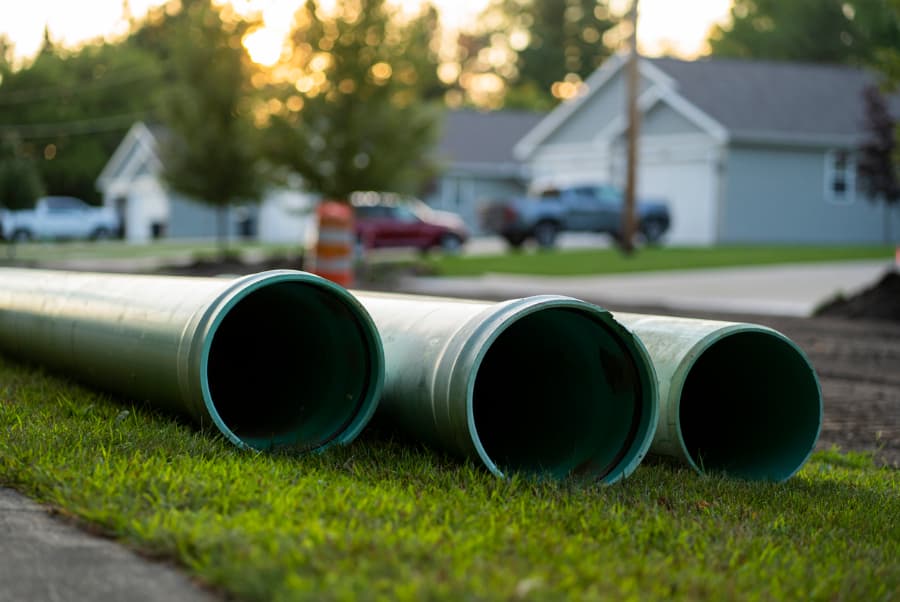
Sewer pipes are made from several different materials, and the type installed on a property affects how the line performs, what kinds of problems may develop over time, and what repair options are most appropriate. Older sewer systems are often made from materials such as clay, cast iron, or Orangeburg, while newer installations commonly use PVC. Knowing the difference helps explain why some sewer lines are more vulnerable to cracking, corrosion, root intrusion, or deformation than others.
When the pipe material is unknown, a sewer inspection is one of the most reliable ways to identify what is underground and evaluate its condition. If the line is already cracked, offset, or deteriorating, a sewer repair may be needed to correct the problem before it worsens.
Why Sewer Pipe Type Matters
The material used in a sewer line influences several important factors, including service life, structural strength, root resistance, and long-term repair planning. Some materials are more brittle. Others are more likely to corrode internally. Some develop joint-related problems, while others are more likely to deform as they age.
Two properties may show similar warning signs, but the actual repair approach can be very different depending on the type of pipe in the ground. That is why pipe identification is often one of the first steps in determining whether a line needs cleaning, monitoring, repair, or replacement.
Common Types of Sewer Pipes
Several sewer pipe materials are commonly found in residential and commercial properties. Some were widely used decades ago and are now associated with predictable age-related failure patterns. Others are newer materials designed for longer life and more consistent performance.
Clay Sewer Pipe
Clay sewer pipes were widely used in older underground sewer systems and is still found in many established neighborhoods. It can last for decades, but it is also brittle and prone to cracking when soil shifts or outside pressure affects the line. Clay pipe joints can also allow root intrusion, especially as the system ages and joints begin to separate.
In many older properties, clay sewer pipe remains in service long after installation, but recurring blockages, root intrusion, and structural defects are common warning signs that the condition of the line should be evaluated more closely.
Cast-Iron Sewer Pipe
Cast-iron sewer pipe is another material often found in older properties, particularly in building drains and connections leaving the structure. It was valued for strength and durability, but over time it can corrode internally. Scale buildup, rust, and internal wall deterioration may begin to reduce flow and weaken the system.
Some cast-iron sewer lines continue performing for many years, while others develop ongoing backups, leaks, or internal collapse as they age. Inspection is often needed to determine whether the problem is limited buildup or broader structural deterioration.
Orangeburg Pipe
Orangeburg pipe is a bituminized fiber conduit that was used in some older sewer systems. Unlike clay or cast iron, it is not a rigid pipe material. Over time, Orangeburg is known to blister, deform, flatten, and collapse, making it one of the more failure-prone materials still found on some properties.
Because it deteriorates in a different way than other sewer pipe materials, Orangeburg often creates ongoing flow restriction and shape loss before a full collapse occurs. Where this material is present, long-term planning usually becomes an important part of the repair discussion.
PVC Sewer Pipe
PVC is one of the most common modern sewer pipe materials. It is lightweight, corrosion-resistant, and widely used in both new installations and replacement work. Compared with many older sewer materials, PVC generally provides more consistent performance and is less vulnerable to internal corrosion.
That does not mean PVC is immune to failure. Poor installation, shifting soil, sagging sections, and joint issues can still affect how the line performs. Even so, PVC usually presents fewer age-related material problems than legacy sewer pipe types.
ABS Sewer Pipe
ABS is another plastic pipe material used in some drainage and sewer applications. It is lighter than older metal systems and may be found in certain installations depending on the era and type of construction. Like PVC, it avoids the internal corrosion associated with metal piping, though joint or structural issues can still develop over time.
While ABS is not discussed as often as clay, cast iron, Orangeburg, or PVC, it is still part of the broader range of sewer pipe materials found in some systems.
Common Sewer Pipe Types and Lifespan
| Pipe Type | Common Era | Typical Issues |
|---|---|---|
| Clay | Pre-1970s | Root intrusion, cracking |
| Cast Iron | 1900–1970s | Corrosion, scaling |
| Orangeburg | 1940s–1970s | Deformation, collapse |
| PVC | 1970s–present | Installation defects, shifting |
| ABS | 1970s–present | Joint issues |
Which Sewer Pipe Types Are Common in Older Properties?
Older properties are more likely to have clay, cast iron, or Orangeburg somewhere in the sewer system. These materials were installed during earlier construction periods and are now more likely to show age-related wear, root intrusion, joint separation, internal corrosion, or deformation.
That is why the age of the property can provide useful clues, but age alone does not confirm pipe type or condition. Past repairs, visible materials, and inspection findings all help create a more accurate picture of what is underground.
Sewer Pipe Problems Often Depend on Material
Different sewer pipe materials tend to fail in different ways. Clay pipes often develop cracking and root intrusion at the joints. Cast iron is more likely to experience internal corrosion, scaling, and progressive wall deterioration. Orangeburg tends to deform and lose shape as it ages. PVC is generally more stable as a material, but improper installation or movement in the surrounding soil can still lead to performance problems.
These differences matter because a simple recurring blockage may be a symptom of a larger structural issue. Understanding the materials your sewer pipe are made from helps explain why certain problems keep returning and why one line may require a very different solution than another.
Sewer Pipe and Drainpipe Are Not Always the Same Thing
The terms sewer pipe and drainpipe are often used interchangeably, but they do not always refer to the same part of the system. Interior drains, branch lines, building drains, and the main sewer connection all play different roles in moving wastewater away from the property.
That distinction becomes important when diagnosing where a problem is occurring. A blockage inside the building drain system is not necessarily the same as a defect in the underground sewer line, even though the symptoms may appear related.
Identifying the Type of Sewer Pipe on a Property
Pipe material is not always obvious from symptoms alone. The age of the structure may suggest what type of sewer line was originally installed, but underground confirmation usually requires more than guesswork. Visible piping, repair records, and past inspections can help narrow the possibilities, but subsurface evaluation is often needed to confirm the answer.
A sewer Inspection can help identify pipe material while also showing joint separation, root intrusion, cracking, offsets, corrosion, or deformation inside the line. That information is often what determines whether a problem is minor, recurring, or structural.
Understanding How the Sewer Line Is Laid Out
Pipe material is only part of the picture. The layout of the sewer system also matters. Understanding where wastewater exits the building, where cleanouts are located, and how the line connects to the main sewer path can help explain where problems develop and how they are accessed during diagnosis or repair.
In many cases, understanding the layout of the system is just as useful as understanding the material itself, especially when repeated backups or recurring defects affect the same portion of the line.
When Pipe Type Becomes a Repair Issue
Not every older sewer line needs to be replaced immediately, but pipe material does affect long-term reliability. A line that is cracked, deformed, offset, corroded, or deteriorated internally may move beyond routine maintenance and into structural repair territory. This is especially true when backups repeat, roots keep returning, or inspection confirms that the pipe itself is failing.
When material breakdown is already affecting system performance, professional New Jersey sewer repair may be necessary to restore flow and prevent more extensive damage later on.
Final Thoughts
The most common sewer pipe types include clay, cast iron, Orangeburg, PVC, and ABS. Each material has different strengths, different weaknesses, and different long-term repair considerations. Understanding the type of sewer pipe on a property helps explain why problems develop, what warning signs matter most, and what type of correction may be appropriate.
When the material is uncertain or the system is already showing warning signs, inspection is usually the best first step. Once the pipe type and condition are confirmed, the right repair or replacement path becomes much clearer.