New Jersey Water Line Repair
Every faucet, fixture, and appliance in your house depends on one buried pipe — the service line that carries water from the street to your meter. When it leaks, you pay for water you never use; when it fails, the whole house goes dry. Arrow Sewer & Drain handles water line repair across New Jersey the same way we handle sewer work: locate the failure precisely, identify what the pipe is made of, and fix only the section that needs it. Most water line problems announce themselves quietly — a soft spot in the yard, a bill that creeps up, pressure that fades at every tap at once. The repair starts with finding the leak, not guessing at it.
24/7 Emergency Water Line Repair
A burst service line doesn’t wait for business hours. Arrow answers emergency water line calls 24 hours a day — we isolate the line, stop the loss, and locate the failure so the repair is scoped before the digging starts.
Need Emergency Water Line Repair?
Understanding what causes emergency water line issues and how they are repaired helps ensure the plumbing system continues operating safely and efficiently.
For assistance diagnosing water line problems, call Arrow Sewer and Drain today.
NJ Master Plumber License # 36BI01352100
Call (732) 595-1595Your Water Line, From The Municipal Main To The Meter
The pipe most homeowners call the water main is, to your utility, the water service line — the run that taps the municipal main under the street, passes through the curb stop, and carries water to your meter and into the house. The utility’s main serves the whole block; the service line serves only you, and in most New Jersey systems the portion from the curb stop to the house is the owner’s responsibility.
That boundary matters because it decides whose repair a failure is. A break in the main takes out the neighborhood and belongs to the utility. A leak in the service line takes out one house — yours — and the repair is yours to make. Everything on this page covers that line: what breaks it, how we find the failure, and how the fix gets scoped.
Why Water Lines Fail
Age and material decide most of it. Homes built before the 1950s may still be served by lead lines; mid-century homes often have galvanized steel that rusts from the inside until pressure dies at every fixture; copper develops pinhole leaks where soil chemistry or stray electrical current eats the wall; and older polybutylene grows brittle and lets go without warning. On top of the material, New Jersey adds its own stressors — frost that drives several feet into the ground and heaves whatever it grips, soils that settle and shift under driveways and additions, and pressure surges that hammer aging joints.
A water line has one more trait that makes small problems expensive: it’s always under pressure. A sewer line leaks only when water runs through it; a water line leaks every minute of every day until someone finds it. That’s why a wet patch that never dries or a bill that climbs without explanation deserves attention now — the line is choosing the timing otherwise.
Where Water Lines Fail — And How We Find The Leak
Failures cluster at predictable points: the tap at the main, the curb stop, mid-yard where the line crosses settled trenches or root zones, and the foundation entry where pipe meets wall. The symptoms point the way — pressure loss at every fixture says the failure is on the service line, not inside the house; a lush or soggy strip in the yard traces the line’s path; a hissing sound near the meter says the loss is close by; water in the basement at the front wall says the entry point.
Locating the leak precisely is what keeps the repair small. We isolate the line, confirm the loss is underground rather than inside the house, and pinpoint the failure before anything is dug. For a deeper walkthrough of the process, see how water line damage is diagnosed.
From Finding The Leak To Restoring Flow
Water line repair is a sequence — find the leak, reach the line, replace what failed. These services carry that sequence, from the first symptom to water back on:
Leak Detection
Pinpoints hidden water loss — underground, under slab, or behind walls — so the repair starts at the failure, not at a guess.

Burst Pipe Repair
Emergency response for an active break: stop the loss, replace the damaged piping, restore safe flow.

Drilling Contractor
Directional drilling that pulls a new water line through a bore — trenchless replacement from curb to foundation.
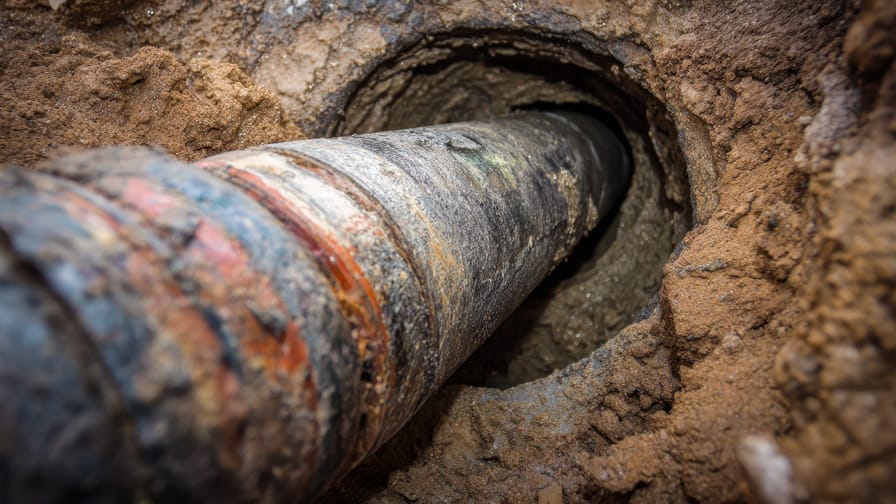
Excavation
Controlled digging scoped to the damaged section when the line is shallow, short, or already exposed.

Hydro Excavation
Pressurized water and vacuum expose the line without damaging it — the safe way to dig around live utilities.

Emergency Plumbing
24/7 response for failures that can't wait, from burst lines to no-water emergencies.

Residential Plumbing
The full residential service line: diagnostics, repairs, and replacements for everything inside the house.

Commercial Plumbing
Water service and plumbing infrastructure for commercial buildings, multi-unit properties, and facilities.

Water Line Repair Or Replacement: How The Call Gets Made
Main water line repair goes wrong when the method gets picked before the failure is understood. Damage that’s contained — a single break in otherwise sound copper, a failed joint, a crushed section under a driveway — favors a sectional repair: expose the failure, replace the section, pressure-test the line. Damage that’s systemic favors replacement: galvanized that has rusted shut along its length, repeated leaks on the same run, or a material — lead or polybutylene — that shouldn’t stay in service regardless of where it’s leaking today.
What Are the Benefits of Water Line Repair?
Restores full water pressure at every fixture in the house
Stops paying for water that leaks into the ground before it reaches your meter
Ends the soggy patches and washed-out soil above the line
Replaces failing material — lead, galvanized, brittle poly — before it bursts on its own schedule
Scopes the work to the located leak — no exploratory digging
Turns a future emergency into planned, scheduled work

Main Water Line Replacement
When the line is past repair, replacement runs one of two ways. Directional drilling bores a path from the curb to the foundation and pulls the new line through it — two small pits instead of an open trench, with the yard, walkway, and plantings above left intact. Where the run is short, shallow, or already exposed, open excavation replaces the line directly. Either way the new line is modern material sized to the house, the connection at the meter and curb stop is remade, and the line is pressure-tested before it’s buried.
Most main water line replacements complete in a day once utility markouts and permits are in place — the water is off for hours, not days.
Is Your Service Line Lead? New Jersey Is Replacing Them
New Jersey law now requires water systems to replace every lead service line in the state within ten years, and utilities are notifying owners whose lines are lead — or whose material is simply unknown. If you’ve received one of those notices, or your home predates the 1960s and no one has ever confirmed what’s in the ground, identifying the material is the first step: we confirm what the line is at the meter entry and document it. Lead and old galvanized lines get replaced, not repaired, and knowing what you have determines whether your utility’s replacement program, or a planned replacement of your own, is the right path. The state’s guidance for residents is published by the NJDEP.
When The Problem Is The Utility’s
Not every water failure is yours. A main break in the street floods the roadway and drops pressure for the whole block — that’s the utility’s repair, and the outage notices that come with it are the tell. One house losing pressure while the neighbors are fine points at your service line. When the failure sits at the boundary — the tap or the curb stop — we document what we find so the responsibility question is settled with evidence, not a phone argument.
What To Expect During Water Line Repair
Most of the worry around water line work comes from not knowing the sequence. Here it is:
- Locate and isolate. The leak is pinpointed and the line isolated, so the loss stops while the repair is scoped.
- Markouts and permits. Utility markouts and each town’s requirements are handled before any digging.
- Access. A directional bore or a dig scoped to the failure — not a trench across the yard by default.
- The new line goes in. Sectional repair or full replacement, connections remade at the meter and curb stop, then pressure-tested.
- Restoration. Backfill, compaction, and surface restoration, with the repair documented.
Why Choose Arrow Sewer & Drain
Arrow is a licensed New Jersey master plumbing contractor (NJ Master Plumber License #36BI01352100), and the same incentive structure that governs our sewer work governs this: the repair is scoped to the located failure, so we have no reason to sell a replacement where a section will do — and no reason to patch a line whose material has already made the decision. You’ll know what your line is made of, where it failed, and why the fix fits before any work is proposed.
Costs And Financing For Water Line Repair
No two water line repairs cost the same, because the price follows what the diagnosis finds: how long the damaged section is, how deep the line sits, what it’s made of, and whether the fix is a section or the whole run.
A pinpointed sectional repair and a full replacement under a driveway are different jobs — which is why the leak gets located before anything is quoted. When the finding calls for full replacement, financing options let the work happen on the line’s schedule instead of waiting on yours.
Nearby Service Locations To Support You
Are you looking for Water Line Repair in New Jersey? We can provide you service from:
Middlesex County, NJ
We serve Middlesex County from our offices in Middlesex, NJ and South Plainfield, NJ.
Somerset County, NJ
We serve Somerset County from our offices in Basking Ridge, NJ, and Bound Brook, NJ.
FAQs About New Jersey Water Line Repair
What is the main water line in a house?
It’s the buried service line that carries water from the municipal main under the street, through the curb stop and meter, into your home. Utilities call it the water service line, homeowners usually call it the main water line — either way, in most New Jersey systems the run from the curb stop to the house is the owner’s responsibility.
Who is responsible for repairing the water line — me or the utility?
The utility maintains the main in the street and, in most systems, the connection out to the curb stop. The service line from the curb stop to your house is generally yours. A failure at the boundary gets documented so the responsibility question is settled with evidence.
How do I know if my underground water line is leaking?
Pressure loss at every fixture, a water bill that climbs without explanation, a soggy or unusually green strip in the yard, water pooling near the sidewalk or foundation, or a hissing sound near the meter. Any one of these can have another cause — together they point at the line, and locating the leak confirms it.
What causes underground water lines to fail?
Age and material above all: lead and galvanized lines past their service life, copper pinholed by soil chemistry, brittle polybutylene. New Jersey’s frost depth, settling soils, and pressure surges finish the job. Because the line is always under pressure, small failures grow until they’re found.
Can a water line be repaired without digging up the yard?
Often. The access is scoped to the located failure — a small excavation at the break rather than a trench — and full replacements can be pulled through a directional bore from curb to foundation. What doesn’t apply here is trenchless lining: liners used in sewer repair aren’t rated for pressurized drinking water, so the trenchless answer for water lines is a new line, not a liner.
When is replacement recommended instead of repair?
When the problem is the pipe, not the spot: widespread corrosion, repeated leaks on the same run, or a material — lead, galvanized, polybutylene — that will keep failing no matter how many sections get patched. A contained break in otherwise sound pipe is repaired; a failing material is replaced.
How long does main water line replacement take?
Most replacements complete in a single day once utility markouts and permits are in place, whether the new line is pulled through a bore or set by excavation. Water is typically off for hours, not days.
How do I know if my service line is lead?
If your utility’s inventory lists your line as lead or unknown, you may have already received a notice — New Jersey law requires every lead service line in the state to be replaced. We confirm the material at the meter entry and document it, so you know whether the utility’s replacement program or a planned replacement of your own is the right path.
 Call Now: (732) 595-1595
Find The Leak, Then Fix Only That
Every water line repair starts the same way: locate the failure, identify the material, and match the fix to what's in the ground. Whether that turns out to be one repaired section, a new line pulled through a bore, or a lead line that's due for replacement anyway, the diagnosis comes first and the estimate follows it. Call (732) 595-1595 or request an estimate below.