Trenchless Pipe Bursting in NJ
Pipe bursting is a trenchless sewer line replacement method — not a repair, a full replacement. A cone-shaped bursting head is pulled through your existing sewer line, fracturing the old pipe outward into the surrounding soil while towing a brand-new, seamless HDPE pipe into place behind it. When the pull is done, the failed pipe is gone and a continuous new line runs in its path, all through two small access pits instead of a trench across your yard.
24/7 Emergency Trenchless Pipe Replacement
Severely damaged sewer lines often fail suddenly. Sudden structural failure, wastewater surfacing in the yard, or repeated system backups can create urgent property and health risks. When a line gives out, fast diagnostics are what limit the damage — the first truck we send carries a camera, not a shovel.
Review our Trenchless Sewer Repair Special
Need Emergency Trenchless Pipe Replacement?
Our team responds to emergency sewer situations across New Jersey, performs camera inspections, and determines whether trenchless pipe replacement is required — or whether a different method fits what the camera finds.
NJ Master Plumber License # 36BI01352100
Call (908) 472-3801What Is Trenchless Pipe Bursting?
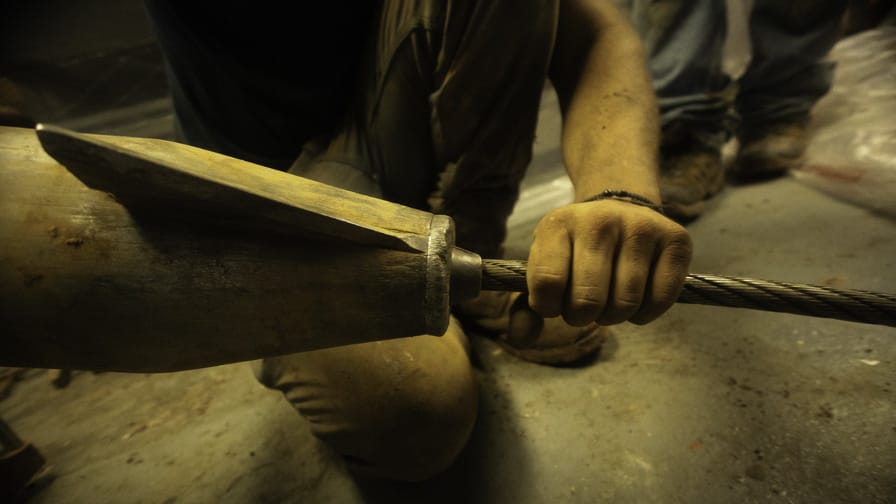
Every sewer replacement used to mean the same thing: dig up everything between the house and the street. Trenchless pipe bursting replaces that trench with two small pits — a launch pit and a receiving pit. A steel cable is threaded through the old line, the bursting head is attached, and a hydraulic pulling unit draws it through. The head’s leading edge splits the old pipe and pushes the fragments into the soil; the new high-density polyethylene (HDPE) pipe follows directly behind it, jointless from end to end.
Because the new pipe doesn’t depend on the old one for support, the condition of the old pipe’s walls barely matters — cracked, channeled, corroded, or deformed, it only has to do one last job: show the bursting head the way. That’s also why bursting can upsize a line, pulling in a new pipe one size larger than the old one where flow demands it.
What Pipe Bursting Can Fix — and What It Can’t
Sewer lines fail in two broad ways, and the way yours is failing decides the method. Some failures attack the pipe wall while the pipe holds its shape — those lines can often be relined. Others attack the pipe’s shape and support: the walls crush, deform, or fall away until there’s nothing left worth rebuilding. A liner rebuilds the wall; it can’t rebuild the geometry. Pipe bursting doesn’t rebuild anything — it removes the failed pipe from the equation entirely. The one thing it still needs from your old line is a followable path.
Conditions pipe bursting can fix
- Cracked, fractured, or broken pipe beyond what a liner can bridge — how cracked and broken sewer pipes behave in NJ
- Severe root damage, where root intrusion has destroyed joints and wall sections rather than just entered them
- Corroded and scaled cast iron with walls too thin to line — how cast iron fails, from scale to pinhole leaks
- Deformed Orangeburg pipe. Orangeburg is bituminized wood fiber — it doesn’t break the way clay or cast iron does. The bursting head tears it apart and presses the softened material into the soil as the new pipe follows. Lining is rarely an option for Orangeburg, so as long as the run can still pass the cable, bursting is the method built for it — see our Orangeburg pipe replacement service for the full picture.
- Offset joints the cable can still pass — what an offset sewer line means
- Undersized lines, since the bursting head can upsize the new pipe as it pulls
What pipe bursting can’t fix
- A fully collapsed line. Bursting needs a continuous route for the cable. When a section has collapsed completely and no path remains, horizontal directional drilling creates a new one instead — more on what a collapsed sewer line looks like.
- A belly in the line. The new pipe follows the old pipe’s path — including its grade. If the problem is a sag where the pipe has settled, bursting would faithfully reproduce it. Bellies call for regrading, by excavation or a new bored route.
- The tap. Bursting stops where your property’s responsibility meets the city main — see below.
Related Sewer & Trenchless Services
Pipe bursting is one of several ways Arrow repairs and replaces residential sewer lines — the right one depends on what the camera finds in your pipe, not on what a webpage promises. The services below cover the rest of the decision: the methods that compete with bursting, the inspection that chooses between them, and the connection point where trenchless work hands off.
Trenchless Sewer Repair
The full toolbox — every no-dig repair and replacement method we use across NJ, and how we choose.

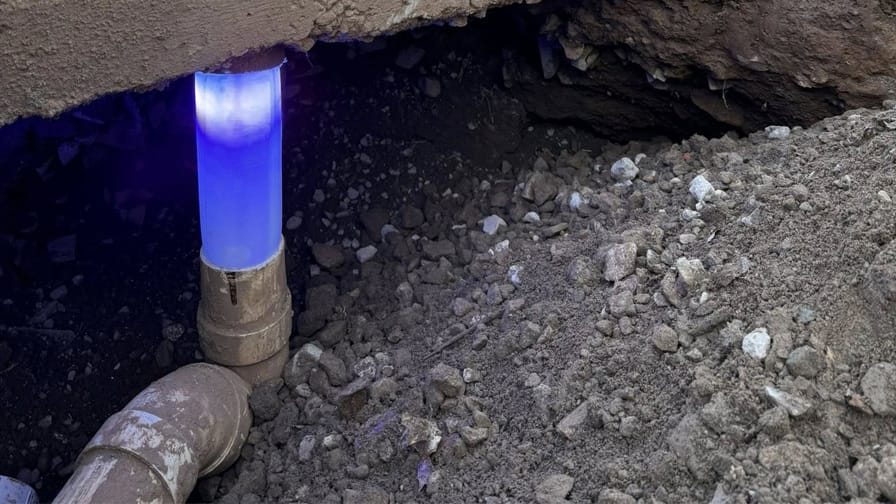
Trenchless Pipe Lining
Resin-cured structural liner for pipes that still hold their shape — repair without replacement.
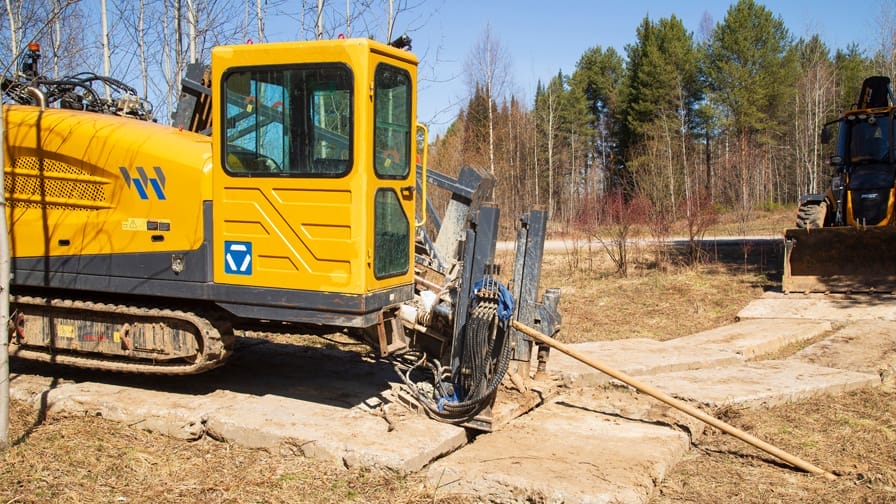
Horizontal Directional Drilling
Bores a brand-new route when a collapsed line leaves nothing to follow.
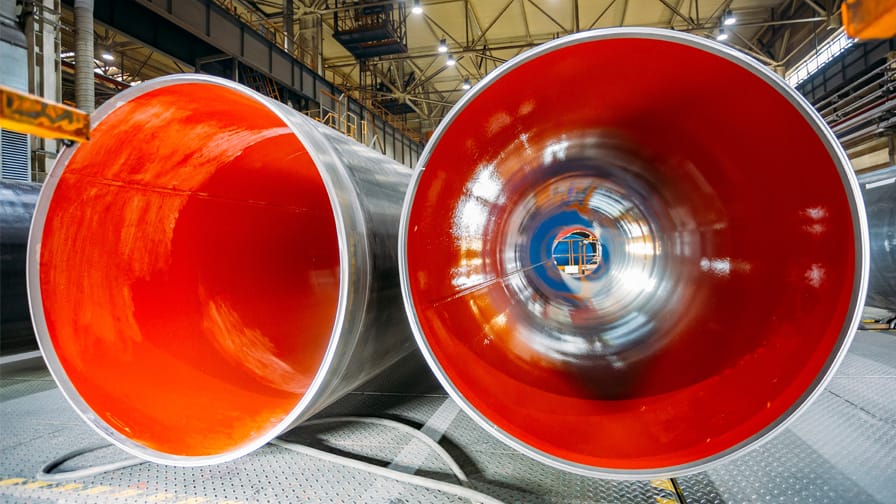
Epoxy Pipe Lining
Coating-based rehabilitation for internal corrosion in otherwise sound pipe.
Main Sewer Line Repair
Repairs the line most homeowners call the main - your sewer lateral, from the foundation to the point of connection - and settles whether anything past the tap is the town's to fix.

Sewer Lateral Connection
Tap and connection-point repairs where your line meets the city main — the spot bursting can't reach.

Sewer Inspection
Interior video evaluation that tells you which method your line needs — before anyone quotes you.

Where Your Sewer Line Runs — and Where Bursting Stops
Your sewer line leaves the foundation, runs as a lateral across your property, and joins the city main at the tap — the fitting where your pipe connects to the municipal line. Pipe bursting replaces the lateral, from the access point at the house to just short of the main.
The tap itself is the one point trenchless methods generally can’t reach; when the tap is the failure, it’s repaired at the sewer lateral connection, typically with a small targeted excavation at the curb. A camera inspection tells us which side of that boundary your problem lives on before any work is quoted.
Benefits of Sewer Pipe Bursting
A new pipe, not a patched old one — full replacement with HDPE rated for 50+ years of service
Jointless from end to end — nowhere for roots to re-enter
Upsizing available — solve capacity problems in the same pull
Two small pits instead of a trench — driveways, mature trees, and landscaping stay put
Most residential pulls finish in a day
Camera-verified before we leave
How Arrow Performs Trenchless Pipe Replacement
- Camera inspection and locating. We confirm the route, the damage, the slope, and the line’s exact depth and path, and mark utilities.
- Pit excavation. A launch pit and a receiving pit, sized to the job — typically at the house cleanout and near the property line.
- The pull. The bursting head fractures the old pipe into the soil while drawing the new HDPE line into place behind it.
- Reconnection. We tie the new line back in at the house and at the lateral connection point, with each joint inspected.
- How we confirm. A final camera pass travels the new line end to end — you see the same footage we do before the pits are closed.
Why Hire Arrow for Trenchless Pipe Bursting
Most sewer companies own one solution — a lining rig, or an excavator — and every diagnosis bends toward the equipment in the truck. Arrow runs purpose-built inspection, lining, bursting, directional drilling, and excavation equipment in-house, so the method we recommend is the one your pipe needs, not the one we happen to have. That’s the discipline behind every job since 2003: diagnose, repair, verify.
- Serving NJ homeowners since 2003 — over two decades of sewer laterals, soil conditions, and township codes
- NJ Master Plumber License #36BI01352100, licensed and insured, with permit and code familiarity across New Jersey municipalities
- Every method under one roof — lining, bursting, HDD, and excavation, so the camera picks the fix, not the inventory
- In-house camera inspection on every structural evaluation — and a final verification pass you watch with us
- Rated Excellent on Google by homeowners across the state
- 24/7 emergency response when a failed line can’t wait
Already holding a replacement quote from another company? Bring it to us for a second opinion — if lining or a smaller repair will do the job, that’s what we’ll tell you.
Trenchless Pipe Bursting Costs and Financing
The cost of trenchless pipe bursting follows the line, not the calendar: how long the run is, how deep it sits, what the two access pits have to pass through to reach it, and whether the new pipe is upsized during the pull. What bursting takes out of the equation is restoration — with no trench across the yard, driveway, or walkways, there’s nothing to rebuild when the work is done.
That’s why estimates follow the camera inspection rather than precede it. For the factors that drive pricing — and a tool that frames a range for your situation — see what a sewer repair costs in NJ. Financing is available for qualified replacements — ask when you call.
Learn more about financing options for your trenchless pipe bursting project.
Nearby Service Locations To Support You
Are you looking for Trenchless Pipe Bursting in New Jersey? We can provide you service from:
Middlesex County, NJ
We serve Middlesex County from our offices in Middlesex, NJ and South Plainfield, NJ.
Somerset County, NJ
We serve Somerset County from our offices in Basking Ridge, NJ, and Bound Brook, NJ.
FAQs About Trenchless Pipe Bursting
How much does pipe bursting cost in NJ?
Less than open-trench replacement once restoration is counted — no torn-up driveway or landscaping to rebuild. The run’s length, depth, pit access, and any upsizing set the price, which is why every estimate follows the camera inspection. The cost guide linked in the section above frames the ranges.
Should I choose pipe bursting or pipe lining?
The pipe decides, not preference. If the walls can support a liner, lining usually costs less. If the pipe is too degraded to line but the route is still followable, bursting replaces it outright. Our camera inspection settles it in one visit.
Can pipe bursting fix a fully collapsed sewer line?
No — bursting needs a followable path through the old pipe. A fully collapsed line calls for horizontal directional drilling, which bores a new route instead.
How long does pipe bursting take?
Most residential replacements are completed in a single day, including pit work. Longer runs or deep lines can add a second day.
How long does the new pipe last?
The HDPE pipe we install is jointless and corrosion-proof, with a service life of 50+ years — it’s a replacement you make once.
How do you confirm the replacement was successful?
A final camera inspection runs the full length of the new line before the pits are closed, and you review the footage with us.
 Call Now: (908) 472-3801
Call Now for Trenchless Pipe Bursting in New Jersey
When your sewer line is past saving, you want pipe bursting contractors who prove it on camera before they quote it. Arrow replaces failed sewer laterals for homeowners across all of New Jersey.