New Jersey Main Sewer Line Repair
When your main sewer line fails, every drain in the house fails with it. Arrow Sewer & Drain handles main sewer line repair across New Jersey the same way every time: a camera locates the failure, the footage picks the fix, and the work is scoped to the section that needs it — nothing more. From root-blocked clay to collapsed Orangeburg, nearly every failure has an established correction, and most of them don't require digging up the yard. The inspection comes first, the estimate follows the footage, and you see everything we see before any work is proposed.
24/7 Emergency Main Sewer Line Repair
A main line backup doesn’t wait for business hours. Arrow answers emergency sewer calls 24 hours a day — we restore flow first, then put a camera on the line so the real cause is on record before it can happen again.
Review our Trenchless Sewer Repair Special
Need Emergency Sewer Line Repair?
If you are experiencing an active sewer backup, call Arrow Sewer and Drain for immediate assistance. Emergency response restores flow and protects the home first. The sewer inspection that follows locates the cause and its position relative to the ownership boundary — and permanent repair decisions wait until the condition of the pipe is confirmed on camera.
NJ Master Plumber License # 36BI01352100
Call (908) 472-3801The Main Sewer Line, From Your Foundation To The Street
The pipe most homeowners call the main sewer line is the one that carries every drain in the house — sinks, tubs, toilets, laundry — out through the foundation and across the yard to the municipal sewer. Plumbers call that buried run the sewer lateral, but the name matters less than the fact that it’s yours: in most New Jersey towns, you own the entire line from the foundation wall to the point of connection with the town’s main.
That single pipe has no backup. When it’s blocked, cracked, or collapsed, everything upstream stops. Repairing it — the right section, with the right method — is what this page covers, and it starts with knowing exactly what failed and where along the run it sits.
Why Main Sewer Lines Fail
Most main sewer line failures build slowly. Clay laterals separate at their joints, and tree roots work into the gaps and widen them season after season. Cast iron corrodes from the inside, narrowing the channel with scale until flow stops. Orangeburg, common in homes built before the 1970s, softens and deforms under soil load. Above them all, New Jersey’s freeze-thaw cycles and settling soils create offsets and low spots that trap waste and stress every aging joint.
Small defects escalate because a sewer line has no tolerance for interruption: New Jersey’s plumbing subcode requires drainage piping to stay unobstructed and properly sloped, and a line that no longer holds either condition fails a little more with every season. A cracked or broken sewer line rarely announces itself early — which is why recurring symptoms deserve a professional look before they choose the timing for you. For the full picture of the environmental and material forces at work, see our guide to why sewer lines fail in New Jersey.
Where Main Sewer Lines Fail: What The Camera Finds
Those forces leave marks a camera can read. Every camera pass answers the same three questions: what’s wrong, where along the run it sits, and which repair corrects it. Seven findings cover nearly every line we scope:
- Root intrusion — usually mid-yard, where the lateral crosses root systems and roots enter at clay joints. Clearing removes the growth but not the opening; a jointless liner seals every entry point at once.
- Cracked or broken pipe — follows stress: shallow cover, driveway crossings, soil transitions. Caught early, a targeted repair or liner restores the section; spread along the run, it becomes a replacement conversation.
- Corrosion and scale buildup — runs the length of cast iron lines. Descaling serves a sound wall, lining serves a thinned one, and replacement takes over when the floor has channeled through.
- Material fatigue — Orangeburg deforms along its whole run, and a deformed host can’t hold a liner. Trenchless replacement pulls new pipe through the same path instead.
- Offset sewer line — concentrates near the foundation and over old utility trenches, where fill settles. Minor offsets can be lined across; severe ones need the section reset or replaced.
- Belly in the sewer line — a run that’s lost its slope. A liner follows the pipe’s existing shape, which is why a true belly is corrected by re-grading the section, not lining it.
- Collapsed sewer line — the end state, where the camera can’t pass and no liner can hold. The answer is new pipe: pulled through the old path where it can be followed, or set by excavation where it can’t.
None of these is cause for alarm — each has an established correction, and the camera’s finding is what selects it. That’s the whole reason the inspection precedes the estimate.
How The Right Main Sewer Line Repair Gets Chosen
Sewer main line repair goes wrong when the method gets picked before the problem is located. So the sequence never changes. If the line is backed up, flow gets restored first — a cleared pipe is one the camera can read. Then the camera runs the full length while a surface locator marks the failure’s distance and depth; New Jersey laterals commonly sit several feet down near the house and deeper toward the street, and knowing exactly where to work is the difference between a scoped repair and an exploratory dig.
The finding routes the fix. A host pipe that still holds its shape takes a liner. A failed line whose path can still be followed gets burst and replaced through two small pits. A collapse, a true belly, or a severely offset section calls for the pipe to be reset or replaced directly. You review the footage with us before anything is proposed — the method has to match what’s on screen, and you should see it there yourself.
Targeted Services For Specific Pipe Conditions
Each of these services answers a specific camera finding. The sequence runs from the house outward — locate the condition and its distance from the tap, restore flow for a clear look at the pipe wall, then repair the section that's yours to fix:
Sewer Inspection
Runs the camera and locator from your access point to the tap, mapping every finding by distance and depth before any repair is proposed.

Hydro Jetting
Clears roots, grease, and scale to restore flow and give the camera a clean look at the pipe wall — often the first step in an active backup.

Trenchless Sewer Repair
The repair family that fixes pipe through existing access points — lining, bursting, and drilling — without opening the yard above it.

Trenchless Pipe Lining
Cures a jointless new pipe inside the old one, sealing root entries, cracks, and corrosion in a host that still holds its shape.
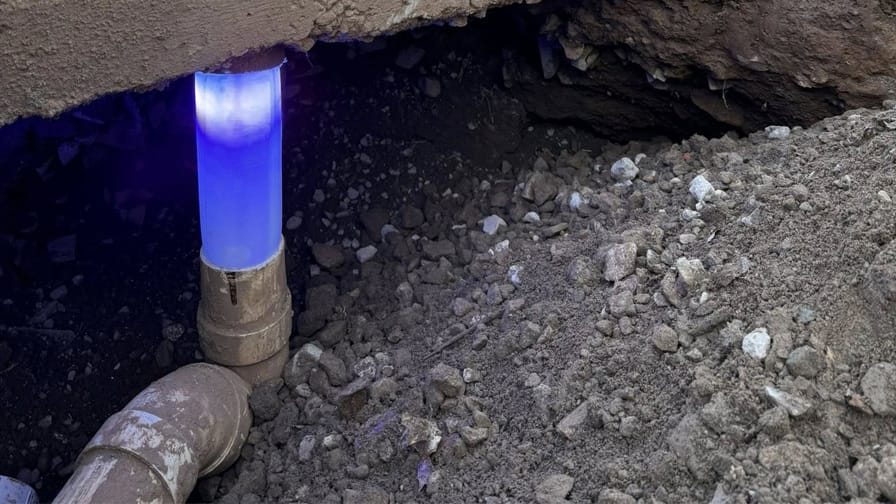
Trenchless Pipe Replacement
Bursts the failed line apart and pulls seamless HDPE through the same path — full replacement without a trench.
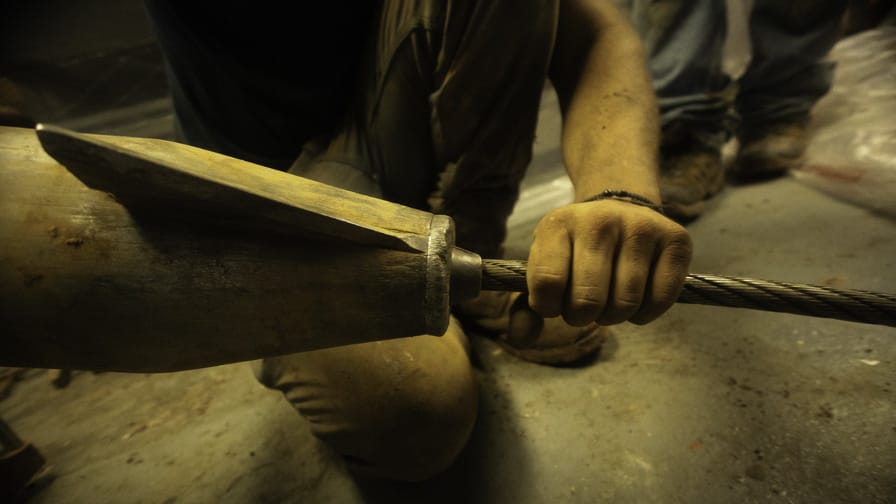
Horizontal Directional Drilling
Bores a new path for the line when the old one can't be followed — new pipe with minimal surface disruption.
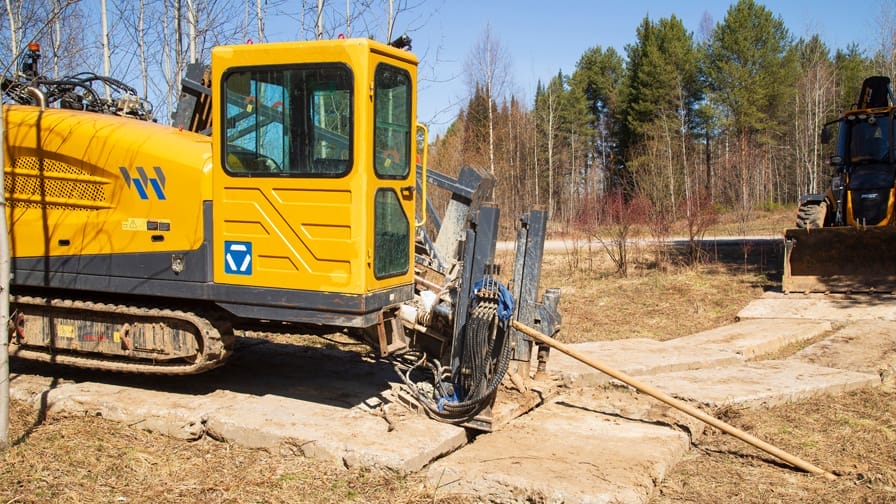
Orangeburg Pipe Replacement
Replaces deformed bituminous-fiber pipe end to end — the one material where replacement, not repair, is the standard answer.

Sewer Lateral Connection
Handles the tap itself: new connections, failed fittings, and re-connections after main work, under each town's rules.

Excavation
Direct access when a collapse or severe misalignment rules out trenchless methods — controlled digging scoped to the damaged section.

Sewer Backup Valve Installation
Installs a backwater valve that stops a surcharged municipal main from pushing sewage back toward your lowest fixtures.

Main Sewer Line Replacement
Some findings end the repair conversation and start the replacement one. Orangeburg that has deformed along its run, cast iron whose floor has channeled through, a collapse the camera can’t pass, or a line that has taken repair after repair — these call for new pipe, not another patch.
Main sewer line replacement in New Jersey runs one of three ways. Where the old path can be followed, pipe bursting pulls new seamless HDPE through it, replacing the whole run through two small access pits. Where the old path can’t be used, directional drilling bores a new one. And where the line is shallow, short, or already exposed, open excavation replaces the section directly. The camera’s findings — material, deformation, depth, and length of the damage — make the call, and the estimate follows from footage you’ll see yourself.
What Are The Benefits Of Main Sewer Line Repair?
Ends the cycle of repeat blockages and clearings
Restores full, reliable flow to every drain in the house
Stops leaks that wash out soil and sink yards and driveways
Keeps sewage and its odors away from your lowest fixtures
Scopes the work to the camera-located section — nothing exploratory
Turns a future emergency into planned, scheduled work

When The Problem Is Past Your Line
Ownership of the run changes at the point of connection. In most New Jersey towns, the boundary sits where your lateral meets the municipal main; some towns set it at the curb or the property line instead. Everything on the house side is yours to repair. The main itself belongs to the town or sewer authority.
The camera settles which side a failure is on. A single home backing up points to the lateral; several homes backing up at once, lowest fixtures first, points to the main. When footage shows a failure past the boundary, we document it — location, depth, and condition — so you can bring it to your town with evidence instead of a complaint.
What To Expect During Main Sewer Line Repair
Most of the worry around main line sewer repair comes from not knowing the sequence. Here it is:
- Inspection and location. The camera runs the full line while a locator marks the failure’s position and depth at the surface.
- Footage review. You see the finding on screen, with every method that fits it — and every one that doesn’t — explained.
- Scoping and town rules. Permits, utility markouts, and each municipality’s requirements are handled before work is scheduled.
- The work. Most trenchless repairs complete in a day; excavation is scoped to the damaged section, not the whole yard.
- Verification. A post-repair camera pass puts the corrected line on record.
Why Choose Arrow Sewer & Drain
Arrow is a licensed New Jersey master plumbing contractor (NJ Master Plumber License #36BI01352100), and the camera-first process isn’t a slogan — it’s an incentive structure. Because the estimate follows the footage, we have no reason to sell a replacement where a liner will hold, and no way to sell either without showing you the condition first.
If another contractor has already quoted you a dig, bring it to us for a second opinion. We’ll put a camera on the line and show you whether the quote matches the condition.
When To Call Arrow
Call when the symptoms repeat. Slow drains through the whole house, gurgling at the lowest fixtures, sewage odors indoors or out, wet or sunken patches along the line’s path, or a backup that returns after clearing — each points at the main sewer line rather than a single fixture. One symptom once might be a fluke. Symptoms that come back are the line telling you where it’s headed, and a camera pass costs far less than letting the pipe choose its own timing.
Costs And Financing For Main Sewer Line Repair
No two main sewer line repairs cost the same, because no two failures are the same. Cost follows the condition: what failed, how long the damaged section runs, how deep it sits, and which method corrects it. That’s why we won’t quote a number before the camera has been down the line — and why you shouldn’t accept one from anyone else. For how each condition shapes the price, see what a sewer repair costs in NJ.
When the finding calls for a larger repair or full replacement, financing options let the work happen on the pipe’s schedule instead of waiting on yours.
Nearby Service Locations To Support You
Are you looking for Main Sewer Line Repair in New Jersey? We can provide you service from:
Middlesex County, NJ
We serve Middlesex County from our offices in Middlesex, NJ and South Plainfield, NJ.
Somerset County, NJ
We serve Somerset County from our offices in Basking Ridge, NJ, and Bound Brook, NJ.
FAQs About New Jersey Main Sewer Line Repair
What is the main sewer line in a house?
It’s the single pipe that carries wastewater from every drain in your home out to the municipal sewer. Plumbers call the buried run from your foundation to the street the sewer lateral — but whichever name you use, in most New Jersey towns the entire run is the homeowner’s responsibility, from the foundation wall to the point of connection with the town’s main.
Who is responsible for repairing the main sewer line?
The run from your house to the point of connection is yours — in most New Jersey towns all the way to the main, though some set the boundary at the curb or property line. The main out in the street belongs to the municipality or sewer authority that owns it. A camera inspection settles which side of that boundary a failure sits on.
How do I know if my main sewer line is broken?
From symptoms alone, you usually can’t. House-wide slow drains, gurgling, backups at the lowest fixtures, odors, and wet spots along the run all point toward the line — but only a camera confirms what failed and where. The seven findings above cover nearly every case, and each looks distinct on footage.
Can a main sewer line be repaired without digging?
Often, yes. A host pipe that still holds its shape can take a cured-in-place liner, and a failed line whose path can still be followed can be burst and replaced with new pipe through two small pits. Digging becomes necessary when the camera can’t pass at all or the pipe’s slope has to be rebuilt — and even then, the excavation is scoped to the damaged section.
What does main sewer line repair cost in NJ?
It depends on what the camera finds: the condition, the length of the damaged section, its depth, and the method that corrects it. A root-sealed liner and a full-run replacement are different jobs at different prices, which is why we don’t quote before inspecting — and why cost questions get answered with footage, not averages. The costs section above covers how each condition shapes the price.
How long does main sewer line replacement take?
Most trenchless replacements — bursting or lining — complete in a single day once permits and utility markouts are in place. Excavated replacements run longer depending on depth and length. The schedule is set by the same footage that set the method.
How do you decide between repair and replacement?
The camera decides. Damage contained to a section of a sound host pipe favors repair or lining; deformation along the run, a channeled pipe floor, or a collapse favors replacement. Material matters too — Orangeburg is replaced, not repaired, because a deformed host can’t hold a liner.
How can I tell whether a backup is my sewer line or the municipal main?
You usually can’t from symptoms alone. A single home backing up points to the lateral; several homes backing up at once, lowest fixtures first, points to the main. A sewer inspection settles it by mapping the blockage’s exact distance from your access point relative to the ownership boundary.
Does clearing a blockage fix the problem?
It restores flow, and in an active backup that comes first. But clearing says nothing about the structural condition of the pipe that let the blockage form. The inspection that follows shows whether the cause was a one-time obstruction or a condition — roots, an offset, a belly — that will bring the backup back.
 Call Now: (908) 472-3801
Find The Failure, Then Fix Only That
Every main sewer line repair starts the same way: a camera pass that shows what failed, where it sits, and which correction fits. Whether that turns out to be a cleared line, a sealed liner, or a full replacement, the footage comes first and the estimate follows it. Call (908) 472-3801 or request an estimate below — and if you're holding someone else's quote for a dig, have us look before you sign.