New Jersey Excavating Contractor
Excavating contractor services support the safe exposure, installation, and repair of underground infrastructure throughout New Jersey. From sewer systems and water service lines to drainage infrastructure, excavation is often required when systems cannot be accessed from the surface.
24/7 Emergency Excavating Services
Excavation emergencies typically involve active sewer backups, water line failures, or ground instability that requires immediate access to underground systems. These situations may present as sudden loss of drainage, wastewater surfacing, or collapsing soil conditions that cannot be safely managed without controlled excavation.
Once access is established, a full evaluation is performed to determine whether trenchless pipe repair, sewer repair or replacement, or full excavation is required for long-term correction.
Review our Trenchless Sewer Repair Special
Do You Need Emergency Excavating Services?
Delaying excavation in these cases can allow conditions to worsen, increasing the risk of structural damage, environmental contamination, or further system failure. Emergency response focuses on stabilizing the area, safely exposing the affected system, and preventing additional impact.
NJ Master Plumber License # 36BI01352100
Call (732) 595-1595Why Soil and Groundwater Conditions in New Jersey Often Require Excavation
Underground systems in New Jersey are heavily influenced by soil composition and water conditions. In Middlesex County, excavation frequently involves working through previously disturbed or mixed soils found in developed areas. These soils may contain fill material, debris, or inconsistent layers that affect stability and access.
In Somerset County, properties often contain clay-heavy soils and silty subsoils that retain moisture and expand when saturated. These conditions can place continuous pressure on underground systems, including sewer lines, water service lines.
Soils such as clay and silt loam hold water and drain slowly. As moisture levels change, these soils expand and contract, which can lead to pipe movement, joint separation, and structural failure beneath the surface. In areas influenced by the Raritan River, tributaries, and local drainage patterns, elevated groundwater levels can further saturate soil and reduce stability during excavation.
New Jersey plumbing standards and the International Plumbing Code require drainage systems to remain properly aligned and unobstructed to prevent system failure. When soil pressure, saturation, and environmental conditions compromise underground infrastructure, excavation becomes necessary to safely access and correct the problem.
Signs of a Failing Sewer Line:
In central New Jersey, where older clay and cast iron lines and shifting soil conditions drive most sewer failures, the warning signs tend to follow a predictable pattern — slow drains, sewage smells, soggy yard patches, and unexplained water bill spikes. For a deeper look at each symptom and what it typically points to, see our complete guide to signs of a leaking sewer line.
Sewer Inspection Guide:
For a deeper look at how a sewer inspection can show where a sewer line has failed — what a camera reveals about both the pipe and the soil supporting it, and how to evaluate any inspection report — see our complete guide to what sewer inspection cameras actually show.
Excavation Services for Underground Systems
Excavating contractor services address specific underground conditions where direct access is required. Each service supports a different type of repair, installation, or environmental condition.
Hydro Excavation
Uses pressurized water and vacuum systems to safely remove soil around utilities, and sensitive areas with minimal disruption.

Drilling Contractor
Directional drilling, HDD, and utility access services supporting sewer and water infrastructure installation.
Sewer Repair
Repairs damaged sewer lines through excavation or trenchless methods to restore proper wastewater flow and function.

Main Sewer Line Repair
Repairs the line most homeowners call the main - your sewer lateral, from the foundation to the point of connection - and settles whether anything past the tap is the town's to fix.

Orangeburg Pipe Replacement
Removes deteriorated bituminous fiber sewer pipe. Restores structural integrity in aging NJ systems. Used when material failure is confirmed.

Water Line Repair
Locates the leak in your buried service line — the pipe most homeowners call the water main — and repairs or replaces only the section that needs it.

How to Determine if You Need Excavating Contractor Services
Underground issues often begin with subtle symptoms, but patterns across drainage, water flow, and ground conditions provide stronger indicators. If you’re trying to understand how to know if excavation is required, these steps help identify when surface-level access is no longer sufficient and deeper evaluation is needed.
Step 1: Check if Multiple Systems or Areas Are Affected
Determine whether the issue involves more than one system, such as drainage, water supply. Widespread impact often indicates a deeper underground condition rather than an isolated problem.
Step 2: Look for Recurring or Worsening Conditions
Identify whether problems continue to return after temporary fixes or progressively worsen over time. Repeated backups, pressure loss, or drainage failure can signal underlying structural issues that require access below the surface.
Step 3: Watch for Exterior Signs and Ground Changes
Look for visible signs such as wet or saturated soil, ground settling, unexplained pooling, or persistent odors outdoors. These conditions often indicate underground failure affecting surrounding soil or infrastructure.
Step 4: Identify Location and System Type
Determine where the issue is occurring to understand the likely system involved. Interior plumbing issues may involve smaller branch lines, while exterior conditions often point to sewer laterals, water service lines.
Step 5: Confirm with Proper Inspection Method
Symptoms alone do not confirm the cause. Interior drains and branch lines may require inspection for pipes as small as 2 inches, residential sewer laterals require a sewer inspection, and larger commercial or municipal systems require a CCTV sewer inspection to determine whether excavation is necessary.
Excavating Services May Include
Sewer line & main excavation
Water service line & main excavation
Drain line exposure for repair access
Utility trenching and line exposure
Foundation and footing excavation

Excavation Requires Structural Accuracy in New Jersey Soils
Excavation in New Jersey requires more than surface-level digging. Soil composition, groundwater levels, and surrounding infrastructure all influence how excavation must be performed.
In Middlesex County, previously disturbed and mixed soils can create unpredictable subsurface conditions that require careful planning and controlled excavation. In Somerset County, clay and silty soil can retain moisture, expand under wet conditions, and place pressure on underground pipes, and utility lines.
In river-influenced areas, saturated soils can reduce load-bearing capacity and increase the risk of trench instability if not properly managed. These combined conditions make excavation a process that must account for both soil behavior and water movement.
Accurate excavation helps ensure the system is exposed safely and that repairs are completed without creating additional structural issues.
Excavation Guided by Site-Specific Conditions
Soil surveys across New Jersey show that properties often contain varying combinations of loam, silt, and clay soils, each reacting differently to moisture and groundwater conditions. This variability directly impacts how excavation is performed and how underground systems behave over time.
Because no two properties have identical subsurface conditions, excavation planning must consider drainage patterns, groundwater levels, and soil composition before work begins. In Central New Jersey, this includes accounting for clay expansion, silty soil saturation, and the effects of nearby waterways on groundwater levels.
This approach helps reduce unnecessary disruption while supporting more accurate and reliable repairs.
How an Excavating Contractor Diagnoses and Accesses Underground Problems
Excavation is often part of a structured diagnostic process used when underground systems cannot be fully evaluated from the surface. This applies to sewer lines, water service lines, and other buried utility connections that may be affected by soil movement, groundwater, or material failure.
After an issue is identified—such as recurring drainage problems, wastewater backup, reduced water pressure, or signs of ground saturation—further evaluation may be needed to determine the full condition of the system. This may involve a sewer camera inspection for drainage systems, or leak detection methods for water lines.
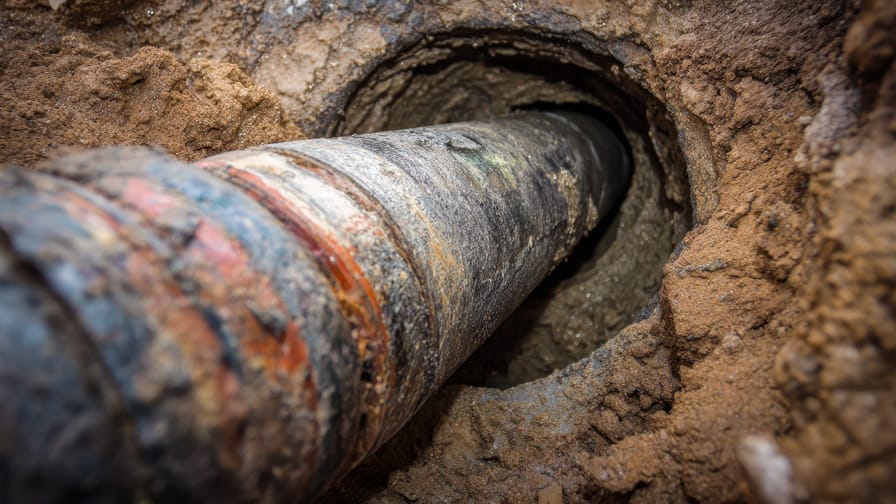
When surface-level access is not sufficient, excavation allows the affected section of pipe, tank, or utility system to be safely exposed. This provides direct visibility so the condition of the system can be confirmed, and the appropriate repair can be performed.
Based on these findings, the next step may include trenchless pipe repair when applicable, sewer repair or sewer line replacement, or direct repair of water service lines when excavation is required.
Potential Findings During Inspection
During evaluation, several structural issues may be identified:
- Pipe collapse or deformation
- Root intrusion within joints
- Corrosion or material breakdown
- Offset or misaligned pipe sections
- Internal blockages or buildup
- Cracked or fractured pipe walls
These findings help determine whether excavation is required and what type of repair is appropriate.
How Excavating Contractor Services Are Performed
Excavation is not always the first step—it is part of a structured approach used when underground systems cannot be accessed or repaired through non-invasive methods. The process begins by identifying the affected area using diagnostic tools to limit unnecessary disruption.
Once the location is confirmed, controlled excavation is performed to safely expose the pipe, tank, or utility system. This allows for accurate evaluation and proper repair or replacement based on the condition of the infrastructure.
Recommended Repair Options for Your Property
Based on the structural condition of underground systems and site-specific conditions across New Jersey, repair options are selected after excavation provides access to the affected area.
- trenchless pipe repair – used when the pipe remains structurally viable and can be rehabilitated internally
- sewer repair – required when sections of drainage pipe are damaged, misaligned, or affected by soil pressure or collapse
- water service line repair or replacement – necessary when leaks, corrosion, or pressure loss affect underground water supply lines
Excavation allows these repairs to be performed accurately by exposing the system and confirming the underlying condition before work begins.
When to Call Arrow Sewer & Drain
- Recurring drainage backups or slow flow
- Sudden loss of water pressure or unexplained leaks
- Wet or saturated areas in the yard
- Ground settling or soft spots
- Persistent sewer odors outdoors
- Repeated need for drain cleaning
- Unknown underground issues
What to Expect During Service
Service begins with identifying the issue and determining whether excavation is required. If excavation is necessary, the area is carefully planned and exposed to access the system.
You will receive clear recommendations, a detailed estimate, and a defined scope of work. After repairs are completed, the system is evaluated to confirm proper operation.
Protecting Underground Systems Over Time
Long-term system performance depends on early detection and proper maintenance, especially in areas affected by moisture-retaining soil and groundwater conditions.
Preventative Best Practices
- Schedule periodic system evaluations
- Address slow drainage or pressure changes early
- Monitor changes in soil or ground conditions
- Maintain proper grading and drainage around the property
- Avoid introducing debris into drains
- Repair minor issues before they escalate
Financing For Your Excavating Project
The team at Arrow Sewer & Drain has garnered a reputation for professionalism and reliability over the years, making us one of the most trusted partners for commercial and residential customers throughout the all of New Jersey area.
Learn more about financing options for your excavating project.
Nearby Service Locations To Support You
Middlesex County, NJ
We serve Middlesex County from our offices in Middlesex, NJ and South Plainfield, NJ.
Somerset County, NJ
We serve Somerset County from our offices in Basking Ridge, NJ, and Bound Brook, NJ.
Frequently Asked Questions About Excavating Services
When is excavation necessary for underground systems?
Excavation is required when sewer, or water cannot be accessed or repaired using non-invasive methods.
Do soil conditions affect excavation?
Yes. Clay, silt, groundwater, and previously disturbed soils all influence excavation stability and system performance.
Can excavation be minimized?
In many cases, excavation is limited to targeted areas based on diagnostic findings to reduce disruption.
How do you determine where to excavate?
Diagnostic tools are used to locate the issue before excavation begins, helping limit unnecessary digging.
 Call Now: (732) 595-1595
Call Now for Fast Excavating Contractor Services in New Jersey
Excavation requires more than accessibility requires understanding how soil, water, and underground systems interact. Arrow Sewer & Drain provides professional excavating contractor services designed to safely expose infrastructure and support accurate, long-term repairs across sewer, water.