New Jersey Orangeburg Pipe Replacement
New Jersey Orangeburg Pipe Replacement addresses failing sewer lines made from outdated fiber conduit material commonly installed between the 1940s and 1970s. As these pipes age, they lose structural strength, leading to deformation, root intrusion, and recurring backups.
24/7 Emergency Orangeburg Pipe Replacement
Orangeburg pipe problems can escalate into emergencies when backups enter the property or when a collapse blocks wastewater flow completely. Situations involving sewage backup, strong odors indoors, or complete drainage failure require immediate attention.
Emergency services focus on stabilizing the system—relieving pressure, restoring temporary flow when possible, and preventing further damage. Permanent repair decisions are made after proper evaluation of the pipe condition.
Review our Trenchless Sewer Repair Special
Need Emergency Orangeburg Pipe Replacement?
If your system is actively backing up or has stopped functioning, call Arrow Sewer and Drain for immediate service.
NJ Master Plumber License # 36BI01352100
Call (908) 472-3801What Is Orangeburg Pipe Replacement?
Orangeburg pipe replacement involves removing or bypassing deteriorated bituminous fiber sewer pipe and installing modern, structurally sound piping. Orangeburg was originally used as a lightweight and inexpensive alternative to clay or cast iron, but it was not designed for long-term durability.
Over time, the material absorbs moisture, softens, and compresses under soil pressure. This leads to flattening, internal restriction, and eventual collapse. Once structural integrity is lost, cleaning alone will not correct the problem—replacement becomes necessary.
This sewer repair service applies primarily to buried lateral sewer lines that connect properties to the municipal system. It does not involve routine drain cleaning or minor clog removal.
Restoring flow does not confirm pipe condition. A sewer inspection (for residential properties) or CCTV sewer inspection (for commercial properties) is often recommended to evaluate deformation, offsets, and collapse. These findings determine whether trenchless sewer repair is viable or if sewer repair or replacement is required.
Signs of a Failing Orangeburg Line:
If you’re noticing backups that return more often each year, slow drains through the whole house, or clearings that pull back dark, fibrous debris, those are the signature symptoms of Orangeburg reaching the end of its service life. See our breakdown of the signs of a failing Orangeburg sewer line for the full arc and what each symptom usually means.
What the Camera Shows in an Orangeburg Line:
For how a sewer inspection reads this material — the early, middle, and late stages of deformation, and what each stage means for monitoring versus replacement timing — see what Orangeburg looks like on camera, stage by stage.
Why Orangeburg Sewer Pipes Fail
Orangeburg pipe is inherently vulnerable to long-term deterioration. Unlike rigid materials, it lacks the strength to withstand decades of soil pressure and environmental exposure.
Common causes of failure include:
- Root intrusion penetrating softened pipe walls
- Cracking and delamination of the fiber material
- Moisture absorption softening the tar-bound fiber wall
- Blistering and interior layers peeling into the flow path
- Pipe offsets caused by soil movement
- Partial or complete structural collapse
As the pipe weakens, it becomes more susceptible to deformation and blockage. Identifying the extent of damage typically requires evaluation through sewer camera inspection to determine the appropriate repair pathway.
Can Orangeburg Pipe Be Saved, Or Does It Have To Be Replaced?
It’s the first question most homeowners ask when a camera inspection confirms Orangeburg pipe: can this line be repaired, lined, or cleaned instead of replaced? It’s a fair question — trenchless lining rescues plenty of aging clay and cast iron lines. Unfortunately, Orangeburg is the one pipe material where the answer is almost always no, and it comes down to how the material fails.
Why Orangeburg pipe usually can’t be lined.
Cured-in-place pipe (CIPP) lining needs a structurally sound, round host pipe to cure against. Orangeburg doesn’t crack the way clay or cast iron does — it deforms. The walls absorb moisture, soften, and squeeze from round to oval under soil pressure, while the layered fiber walls blister and delaminate from the inside. A liner installed in an ovalized, delaminating pipe has nothing stable to bond to, and the host pipe keeps deforming around it. In the rare case where a camera shows a section that still holds its shape, lining that segment only postpones the failure of the identical material on either side of it.
Why spot repairs rarely make sense.
Replacing a single failed section splices new pipe into a line where every remaining foot is the same age and same material, already absorbing moisture at the same rate. The repair itself may hold — the pipe next to it won’t. Most homeowners who choose a spot repair on Orangeburg end up paying for excavation twice.
Why cleaning isn’t a fix — and can make things worse.
Snaking or jetting an Orangeburg line clears the immediate blockage, but the blockage was a symptom: the pipe deforming, blistering, or letting roots in. Worse, a softened fiber wall doesn’t have the structural strength of clay or cast iron, so aggressive cabling or high-pressure jetting can tear blistered material loose or push a weakened section into collapse. When our technicians find Orangeburg during a drain cleaning call, we stop and have the camera conversation first — clearing the line buys time, but only replacement ends the cycle.
The good news: full replacement is a one-time fix. Modern replacement pipe is rated for a century of service, and in most yards we can install it without trenching — see how below.
Related Services For Orangeburg Pipe Replacement
Orangeburg replacement follows a predictable path: a camera confirms the material and its condition, the findings pick the method, and the job ends with modern pipe in the ground. These are the services that do that work — from first inspection to final backfill.
Sewer Inspection
Confirms whether your lateral is Orangeburg and how far deformation has progressed — the finding that decides between lining, pipe bursting, and excavation.

Main Sewer Line Repair
Covers repair of the lateral itself — the run homeowners call the main sewer line — from locating the failure to fixing the section that's yours, whatever the pipe material.

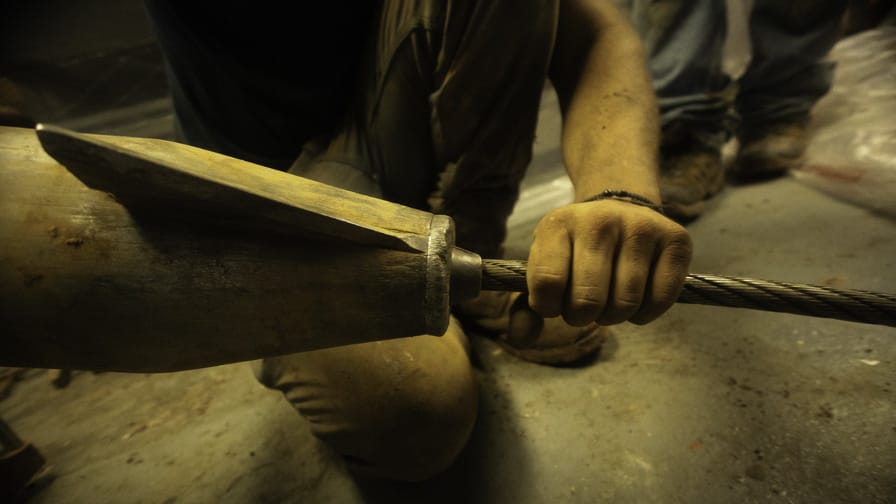
Trenchless Pipe Replacement
Bursts the failed Orangeburg line apart and pulls seamless HDPE through its path — full replacement through small access pits instead of a trench.
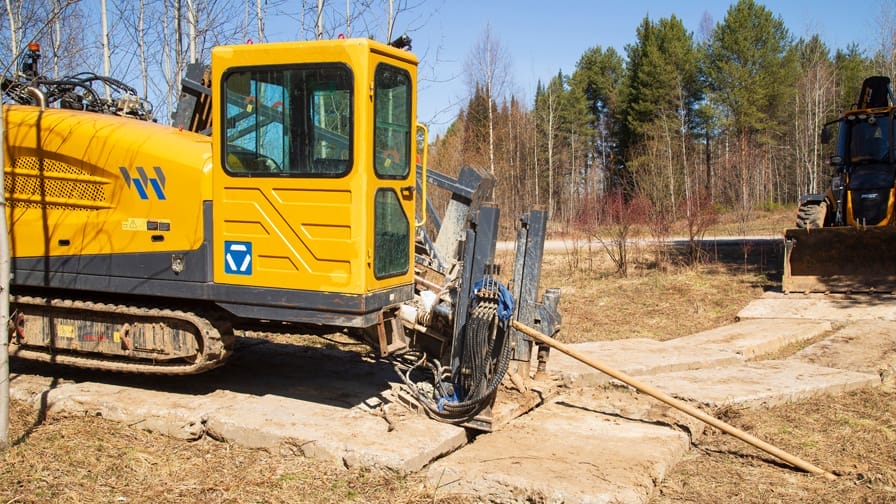
Horizontal Directional Drilling
Installs a new lateral on a fresh path when the old Orangeburg run sits under driveways or additions, or is too collapsed for bursting equipment.
Excavation
Open-trench removal and gasketed PVC replacement for Orangeburg lines too deformed or collapsed for any trenchless method to pass through.

Hydro Excavation
Exposes the line and surrounding utilities at access-pit locations using pressurized water and vacuum — no digging blades near a fragile fiber pipe.

Orangeburg Sewer Line Replacement In NJ: Where We Find It
Orangeburg sewer line replacement in NJ is concentrated in a specific generation of housing: the subdivisions that went up fast between the end of World War II and the early 1970s, when Orangeburg was the budget-friendly pipe of choice for builders. Across New Jersey, that describes entire neighborhoods — postwar developments in communities where homes from the 1950s and ’60s are still on their original sewer laterals.
If your home was built in that window and the line has never been replaced, there’s a real chance Orangeburg is what’s under your yard — here’s how to find out what your home has.
Benefits of Orangeburg Pipe Replacement
Restores full structural integrity of the sewer line
Eliminates recurring root intrusion issues
Prevents unexpected pipe collapse
Improves overall drainage performance
Reduces need for repeated service calls
Protects property from sewage exposure

Orangeburg Sewer Pipe Replacement: What We Install Instead
Every Orangeburg sewer pipe replacement ends with one of two modern materials in the ground, and the right one depends on the replacement method your property calls for.
HDPE for trenchless pipe bursting
When the line qualifies for trenchless pipe bursting, we pull a seamless high-density polyethylene (HDPE) pipe through the path of the old Orangeburg line, fracturing the old fiber pipe outward as the new pipe takes its place. HDPE arrives as a single fused length — no joints along the run means no seams for roots to find, which matters on a line that’s likely been feeding roots for decades.
PVC for open excavation
Where excavation is the better route — severe collapses, bellied sections that need regrading, or very shallow lines — we install gasketed PVC sewer pipe, the standard for buried gravity sewer lines. PVC is rigid, smooth-walled, and impervious to the moisture absorption that doomed the original pipe.
Connecting new pipe to old plumbing
Converting Orangeburg to PVC or HDPE also means proper transitions at both ends of the run — flexible transition couplings where the new line meets your home’s stack and, at the street side, whatever the township requires at the connection point. Sizing these transitions correctly is part of the job; Orangeburg’s outside dimensions don’t match modern pipe, and an improvised fitting is a future leak.
Either way, the material conversation ends the same place: both PVC and HDPE are rated for roughly 100 years of service life — a permanent answer to a pipe that was never built to last.
How Arrow Performs Orangeburg Pipe Replacement
- Assessment
We review property history, backup frequency, and prior service records to understand the problem. - Diagnostics
A sewer inspection or CCTV sewer inspection evaluates structural integrity, deformation, offsets, and collapse. This determines whether trenchless pipe lining, Trenchless pipe replacement, sewer repair or replacement, or excavation is required. - Service Execution
When conditions allow, trenchless sewer repair methods may be used. If the pipe is severely deformed or collapsed, excavation or hydro excavation is performed to remove and replace the failed line. - Verification
Post-repair inspection confirms proper grade, secure connections, and unrestricted wastewater flow. - Cleanup
Work areas are restored and stabilized following completion.
Why Choose Arrow Sewer & Drain for Orangeburg Pipe Replacement
- Experience with legacy sewer materials like Orangeburg
- Structured diagnostic and evaluation process
- Clear repair pathway recommendations
- Residential and commercial service capability
- Emergency response availability
- Access to modern trenchless repair technology
- Focus on long-term system correction
Professional replacement restores structural reliability and consistent drainage performance.
What Does Orangeburg Pipe Replacement Cost In NJ?
The cost to replace Orangeburg pipe depends on a handful of factors: how many feet of line need to be replaced, how deep the pipe sits, what’s above it (lawn, driveway, patio, or mature landscaping), and whether trenchless pipe bursting or open excavation is the right method for your property. Township permit and inspection fees also vary across New Jersey.
Because Orangeburg deforms and blisters rather than cracking cleanly, a camera inspection tells us up front how much of the line is failing — so your estimate reflects the real scope of work before anything is dug.
For a ballpark number based on your home’s situation, try our sewer repair cost estimator.
Nearby Service Locations To Support You
Are you looking for Orangeburg Pipe Replacement in New Jersey? We can provide you service from:
Middlesex County, NJ
We serve Middlesex County from our offices in Middlesex, NJ and South Plainfield, NJ.
Somerset County, NJ
We serve Somerset County from our offices in Basking Ridge, NJ, and Bound Brook, NJ.
FAQs About Orangeburg Pipe Replacement
How do I know if my property has an Orangeburg pipe?
Most property owners don’t know until the material is identified during a sewer inspection — Orangeburg is buried, and nothing above ground announces it. Homes built between the 1940s and early 1970s are the most likely candidates, especially in neighborhoods developed during the postwar housing boom, but building records from that era are often incomplete or silent on pipe material. A camera inspection is the only way to confirm what your lateral is actually made of, and it’s worth doing before symptoms appear rather than after a backup forces the question.
What are the signs that my Orangeburg pipe is failing?
Common signs include recurring backups, slow drainage across multiple fixtures at once, sewage odors inside or in the yard, and soft or sunken areas in the lawn above the line. These symptoms typically mean the pipe is deforming or beginning to collapse — as Orangeburg flattens, the channel narrows and snags waste, which is why the same clog keeps returning no matter how often the line is cleared. If you’re seeing any combination of these on a home from the Orangeburg era, a camera inspection should be the next step.
Can Orangeburg pipe be repaired, or does it always need to be replaced?
It depends on the condition of the pipe. If a camera inspection shows the line still holds its original round shape, trenchless pipe lining may be possible, and it can add decades of service life at a lower cost than full replacement. In practice, however, most Orangeburg lines have already begun to deform by the time they’re inspected, and a flattened pipe can’t accept a liner — which is why the majority ultimately require replacement. The inspection is what settles it: shape intact, lining is on the table; shape lost, replacement is the sound investment.
Why does Orangeburg pipe fail over time?
Orangeburg is made from compressed wood fiber bound with coal tar pitch — essentially layered paper — so unlike clay or cast iron, the material itself absorbs moisture and gradually softens over decades in the ground. Once softened, it can no longer resist the weight of the soil above it, and the pipe flattens from a circle into an oval, blisters on its interior walls, and eventually cracks or collapses. Root intrusion accelerates all of this, since roots exploit the softening seams. It isn’t a question of whether the material degrades, only how far along the process is.
Will cleaning or clearing the line fix Orangeburg pipe problems?
No. Cabling or jetting can restore flow temporarily, but Orangeburg problems are structural — the pipe itself is deforming — and no amount of cleaning restores a flattened pipe to round. Aggressive cleaning can actually make things worse, since cutting heads and high-pressure jetting are hard on a softened fiber pipe wall. If a line keeps clogging on a home from the Orangeburg era, treat repeat cleanings as a symptom, not a solution: the problem will continue, and typically worsen, until the pipe is repaired or replaced.
Do all Orangeburg sewer lines need to be replaced?
Not immediately. A line that still holds its shape and drains properly doesn’t demand emergency action — but because the material only deteriorates in one direction, every Orangeburg line is on the path to replacement eventually. Replacement becomes the clear recommendation when inspection shows deformation, blistering, or collapse, or when recurring backups show the pipe can no longer function reliably. The advantage of inspecting before that point is control: you can plan and budget the replacement on your schedule instead of dealing with a collapsed line as an emergency.
Can Orangeburg pipe cause problems throughout the entire property?
Yes. The Orangeburg lateral is the single line that carries every drain in the house to the municipal main, so when it fails, the whole plumbing system feels it at once — toilets, showers, sinks, and laundry all back up or slow down together. That pattern is actually a useful diagnostic: one slow fixture usually means a local clog, while trouble across multiple fixtures points to the main line. In severe failures, sewage can back up into the lowest drains in the home or surface in the yard, extending the damage well beyond the plumbing itself.
Does replacing Orangeburg pipe always require excavation?
Not always. Many Orangeburg lines can be replaced by trenchless pipe bursting, which pulls a new pipe through the old path while breaking the failed pipe apart — replacing the entire run through small access pits rather than a full-length trench, and sparing driveways, walkways, and landscaping. Excavation is reserved for lines that are too far collapsed for bursting equipment to pass through, or where depth, utilities, or soil conditions rule trenchless out. A camera inspection determines which method your line allows.
How much does it cost to replace Orangeburg pipe in NJ?
The cost to replace Orangeburg pipe depends on the length and depth of the line, what sits above it, whether trenchless pipe bursting or open excavation is the right method, and your township’s permit fees. Because Orangeburg deforms rather than cracks, a camera inspection defines the true scope before we quote — so the estimate reflects your line, not a generic average. For a ballpark based on your situation, use our sewer repair cost estimator.
Does homeowners insurance cover Orangeburg pipe replacement?
Usually not the pipe itself. Standard homeowners policies treat Orangeburg failure as gradual deterioration, which is typically excluded — though sudden damage that results from a failure (like a backup into the home) may be covered, and some insurers offer service-line endorsements that change the math. Every policy is different, so check yours before assuming either way. Financing is available for replacements that insurance won’t touch.
How long does Orangeburg pipe replacement take?
Most residential replacements are completed in one to two days. Trenchless pipe bursting is typically the faster route since it needs only small access pits at each end of the run; full excavation takes longer when the line is deep or when surface restoration is involved. Emergency stabilization — getting a blocked line flowing again — happens the same day, with the permanent replacement scheduled right behind it.
 Call Now: (908) 472-3801
Call Now for Orangeburg Pipe Replacement in New Jersey
If your property is experiencing recurring sewer problems or confirmed Orangeburg pipe deterioration, proper evaluation is the first step. Identifying the condition of the pipe determines whether trenchless sewer repair is possible or if full sewer repair or replacement is required.