
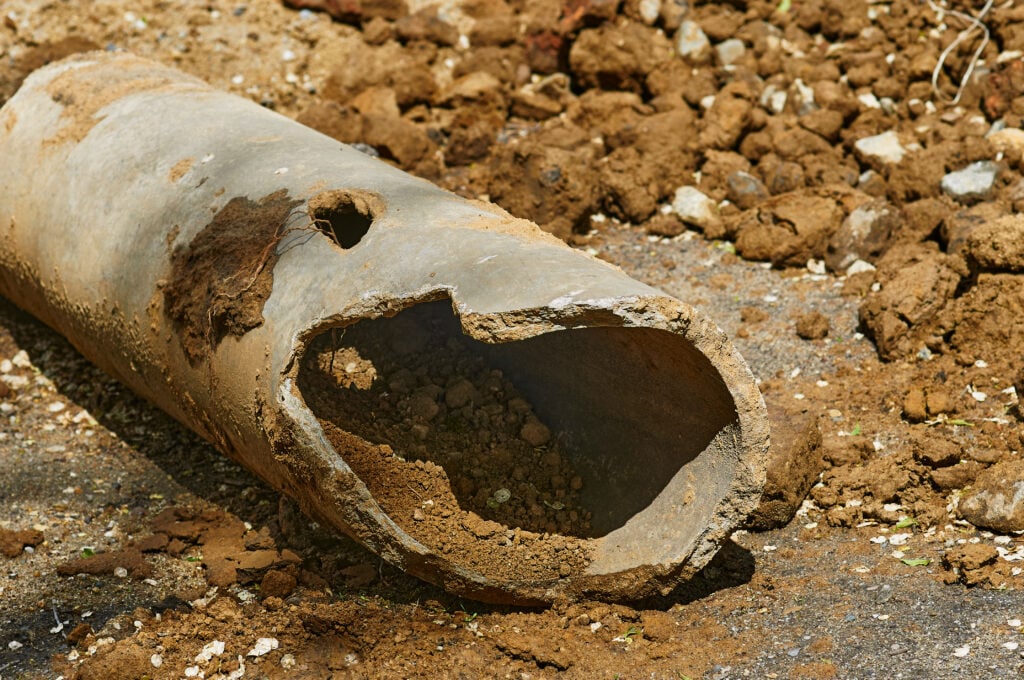
Clay sewer pipes were widely used in older sewer systems long before modern plastic piping became standard. Many properties still have clay sewer lines in service today, especially in areas with aging underground infrastructure. Because clay resists corrosion, it can remain functional for decades. At the same time, age, root intrusion, soil movement, and joint separation often make older clay lines more vulnerable to recurring sewer problems.
Within the broader topic of types of sewer pipes, clay remains one of the most important older materials to understand because it is still found beneath many established properties. Understanding what clay sewer pipe is, how long it typically lasts, and what causes it to fail helps property owners make better decisions when drainage issues begin to appear.
What Is Clay Sewer Pipe?
Clay sewer pipe, often called vitrified clay pipe, is an older sewer material made from natural clay that is shaped and fired at high temperatures. It was commonly installed in underground sewer systems because it does not rust and can tolerate wastewater exposure for many years.
Unlike newer plastic piping, clay sewer pipe is typically installed in shorter sections joined together along the line. That jointed construction is one reason clay systems often develop problems over time. While the clay itself may remain durable, the joints can weaken, shift, or allow root intrusion as the line ages.
Clay pipes are most often found in older sewer laterals that connect a building to the municipal main. In many cases, it remains buried and unnoticed until recurring drainage issues, backups, or sewer odors begin to point to a deeper problem.
How Long Does Clay Sewer Pipe Last?
Clay sewer pipes can often last 50 to 100 years, depending on installation quality, surrounding soil conditions, root activity, and how well the line has held its alignment over time.
Some clay sewer lines remain usable for many decades with only minor maintenance. Others begin to develop problems much sooner because the joints separate, the pipe shifts, or roots repeatedly enter the system. That is why the useful life of a clay sewer line depends on more than the material alone. The actual condition of the installed line matters more than the age range by itself.
In older New Jersey properties, clay sewer pipes may already be near or beyond the point where inspection is warranted, especially if the line has started to show repeated performance problems.
Why Was Clay Sewer Pipe Used in Older Sewer Systems?
Clay was once a practical sewer material because it was durable, widely available, and resistant to internal corrosion. Before PVC became common, clay was considered a dependable option for underground wastewater transport.
It was especially useful in an era when many sewer systems were built in stages across growing neighborhoods and commercial areas. At the time, clay offered better corrosion resistance than some metal options and could perform well when properly installed and undisturbed.
The challenge is that many of those older systems are now decades old. Even when the clay itself remains relatively strong, the surrounding conditions may have changed. Tree roots grow larger, the soil shifts, settlement occurs, and repeated use exposes weaknesses at the joints.
Common Problems with Clay Sewer Pipe
Clay sewer lines often fail in predictable ways as they age.
Root Intrusion
Root intrusion is one of the most common problems with clay sewer pipe. Because the system is made of separate sections, roots can enter through tiny gaps or weakened joints. Once inside, they expand and begin catching paper, waste, and debris. Over time, this leads to recurring clogs and restricted flow. Learn more about root intrusion and how it affects sewer pipes.
Cracked Pipe Sections
Clay is durable, but it is also brittle compared with modern flexible materials. Ground movement, settlement, or surface loading can crack individual sections. Even a small fracture can begin collecting debris or allow surrounding soil to interfere with proper flow.
Offset Joints
As the ground shifts over the years, one section of clay pipe can move slightly out of alignment with the next. These offsets interrupt the flow path and create edges where waste can snag. A line with several offset joints often experiences repeated backups.
Joint Separation
Older joints can weaken and separate over time. Once separation begins, roots, debris, and soil infiltration become more likely. This often turns what seems like a simple clog into an ongoing structural sewer problem.
Signs that a Clay Sewer Line May Be Failing
A failing clay sewer line often gives warning signs before it fully breaks down. Common symptoms include slow drains across multiple fixtures, frequent backups, gurgling toilets, sewer odors, and repeated need for drain clearing.
In some cases, there may also be signs outside the structure, such as a wet patch in the yard, a depression over the sewer route, or unusually lush grass above the line. These symptoms do not always confirm a clay sewer pipe problem by themselves, but they often signal that the underground line needs to be inspected.
Can Clay Sewer Pipe Be Repaired?
In some situations, yes. Clay sewer pipes can sometimes be repaired if the damage is limited and the rest of the line still has enough structural integrity to remain in service.
A repair may be possible when there is one isolated broken section, a localized root-entry point, or a limited area of joint failure. The suitability of repair depends on the extent of the damage and whether the surrounding pipe remains stable.
What matters most is whether the problem is isolated or part of broader line deterioration. If the pipe has multiple failing joints, repeated root intrusion, or widespread cracking, a single repair may only provide temporary relief.
When Clay Sewer Pipe Should Be Replaced
Replacement is often the better long-term option when the clay sewer line shows repeated structural failure or widespread deterioration. A line that continues to clog because of multiple root intrusions, recurring offsets, fractures, or partial collapse is usually moving beyond the point where simple repair is cost-effective.
Replacement may be the better choice when the line has recurring root intrusion, multiple cracked sections, repeated joint separation, or signs of partial collapse. It may also make more sense when clearing only restores temporary flow or when repair costs begin approaching full replacement value. When that happens, the next step is usually evaluating the most appropriate path for New Jersey sewer repair based on the actual condition of the line.
How a Camera Inspection Confirms Clay Sewer Line Condition
The most reliable way to evaluate clay sewer pipe is with a sewer inspection. A camera inspection can confirm the pipe material, identify joint separation, locate cracks, show root intrusion, and reveal whether the line is still aligned well enough to remain in service.
Without inspection, a recurring blockage may be mistaken for a basic clog when the real issue is an aging clay sewer line with structural defects. That is why diagnosis comes first. A visible inspection record makes it easier to determine whether the line is a candidate for repair or whether replacement is the more practical option.
Final Thoughts
Clay sewer pipes can last a long time, but many older systems eventually develop predictable problems related to root intrusion, shifting soil, cracking, and joint separation. While some clay lines can still be repaired successfully, others reach a point where replacement becomes the more dependable long-term solution.
As one of the more important older sewer materials, clay remains common in established properties and deserves careful evaluation when recurring drain or sewer problems begin. A proper inspection helps determine whether the line is still serviceable or whether repair or replacement is the better next step.