Updated On 07/23/2026
Sewer replacement quotes are expensive for reasons that have almost nothing to do with the pipe. Below is everything this guide covers: why excavation and restoration — not materials — drive the price, what permits and code compliance add, how the diagnostic shapes the entire quote, what each trenchless method actually costs, and the underground unknowns that make contractors price the same job differently. Jump to a section below, or read straight through — and if you already have a quote in hand, you’ll know exactly what to check it against.
If you’ve ever gotten a quote for sewer line replacement, you probably did a double take. Five thousand dollars? Fifteen thousand? Twenty-five? For a pipe most homeowners have never even seen?
The sticker shock is real, and it leads a lot of people to assume their plumber is gouging them. The truth is more complicated. Sewer line replacement sits at the intersection of heavy excavation, specialized labor, municipal regulations, a real diagnostic question about what’s wrong — and a whole lot of dirt. Each of those factors adds real cost. And the single biggest variable in the final number isn’t the pipe, the labor, or even the permits. It’s whether the contractor figured out the right repair before quoting it.
Here’s a breakdown of where the money goes, why two quotes for the “same” job can differ by tens of thousands, and how a proper diagnosis up front can change the price more than any other decision in the project.
You’re paying for excavation, not pipe
The pipe itself is one of the cheapest parts of the job. The length of PVC sewer pipe costs a few dollars per foot at any supply house. What you’re really paying for is everything required to achieve it.
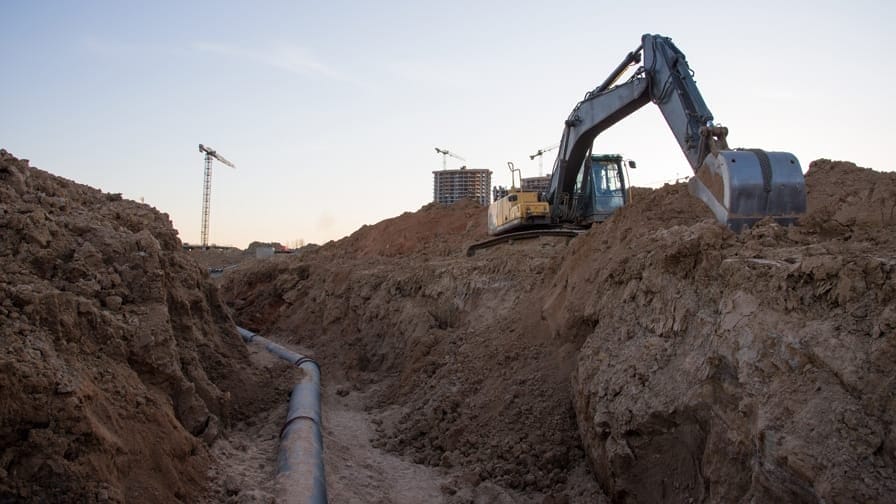
Your sewer line is typically buried three to six feet underground, and in New Jersey it has to sit below the frost line — generally 36 to 42 inches depending on jurisdiction. With traditional excavation methods, the trench has to be dug, shored up so it doesn’t collapse on workers (OSHA requires this on any trench over 5 feet deep — non-negotiable), and eventually backfilled and compacted in lifts to prevent the surface from settling later. If the line runs under your driveway, sidewalk, patio, mature landscaping, or — worst case — a portion of your home’s foundation, those features must be cut through, removed, or worked around. Then they must be put back.
Restoration is often the single biggest line item on a traditional sewer replacement quote. A simple straight run through an open lawn might cost a fraction of what it costs to replace the same length of pipe running under a stamped concrete driveway with a fifty-year-old oak tree sitting on top of it. The pipe and labor for the actual replacement might be similar; the difference is what has to be torn up to reach it and what has to be rebuilt afterward.
Permits, inspections, and code compliance
In some New Jersey municipalities, the homeowner is responsible for the line all the way to the connection at the street main — which can mean cutting into and repairing the public road. That brings additional permits, traffic control requirements, and pavement restoration fees that can easily add several thousand dollars.
Roadway Pavement Moratorium
And there’s a timing trap most homeowners never see coming: if the road over your lateral was recently repaved, the town likely has a pavement moratorium on it — a period, often three to five years, when cutting into the new surface is restricted. A moratorium doesn’t stop the repair, but it changes the price. Towns commonly require full-lane or trench-width-plus repaving instead of a simple patch, charge a degraded-pavement fee, or in some cases withhold an open-cut permit until the moratorium expires. The repair itself might be straightforward; the cost of putting the road back the way the town demands is what balloons. This is one of the strongest practical arguments for trenchless: pipe bursting and CIPP often reach the lateral through small access pits — sometimes without cutting the road at all — which sidesteps the moratorium restoration spec entirely.
Specialized equipment and labor
Sewer work requires equipment that most contractors don’t keep in the back of a pickup truck. Excavators, trench shoring boxes, sewer cameras with locator transmitters, hydro-jetters, hydraulic bursting rigs, CIPP curing equipment, and hydro-excavation trucks all represent significant capital investment. A contractor who can’t offer trenchless methods at all is usually one who hasn’t made that investment — which limits your options before the diagnosis even happens.
The labor side matters too. Sewer work is dirty, physically demanding, and carries real risks. Trench collapses kill workers every year, which is why proper shoring isn’t optional. Exposure to raw sewage requires proper PPE and decontamination protocols. Experienced sewer technicians who can correctly diagnose problems on a camera, operate the equipment, and pass inspection on the first try aren’t cheap, and shouldn’t be. The price reflects the training and the risk.
The Diagnostic Comes Before the Quote — and It Drives the Price
Here’s the part that surprises most homeowners: the single biggest cost variable on a sewer line replacement isn’t any of the line items above. It’s whether anyone correctly diagnosed what’s wrong with the line before writing the quote.
Before any reputable contractor quotes a full replacement, they should run a camera through the existing line. A sewer inspection is a small high-resolution camera on a flexible cable, fed through the line from a sewer cleanout. It produces video of the inside of the pipe, and the inspection should also include locator data — the camera head has a transmitter, and a locator above ground pinpoints exactly where the camera is, both depth and position.
For a complete walkthrough of what a proper inspection should reveal, see our companion guide on sewer inspection: what cameras actually show.
Without that information, a contractor pricing a replacement is essentially guessing about three things that drive the cost:
How much pipe actually needs replacing. A camera with a locator can show that the failure is a 6-foot section 30 feet from the house — meaning you don’t need to replace the whole 80-foot run. A contractor without that information will often quote the full replacement because it’s the safe bet for them. It’s not the safe bet for your wallet.
What kind of failure it actually is. A single offset joint, root intrusion at one location, broader root infiltration along the line, scale buildup, internal corrosion, a belly that pools waste, or a fully collapsed section are all very different problems with very different repairs at very different prices.
Which method will actually work. This is where the cost story really opens up — because traditional excavation isn’t the only option, and the right alternative often costs significantly less.
Pipe-Driven vs. Substrate-Driven Failures: The Distinction That Decides the Price
There’s one more diagnostic question that sits underneath everything else, and it’s the one that determines whether a cheap repair stays cheap or turns into the most expensive job you’ll ever pay for twice.
A pipe-driven failure means the pipe itself is the problem: corrosion, root intrusion at joints, cracks, scale buildup, the predictable post-50-year breakdown of Orangeburg pipe in post-war New Jersey homes. The soil and bedding around the pipe are sound. When the pipe is the problem and the soil is fine, trenchless methods often work beautifully — the structural problem is inside the pipe, and lining or replacing the pipe internally addresses the actual failure point.
A substrate-driven failure means the soil and bedding around the pipe are the actual cause. The pipe might be cracked, but the reason it cracked is that the bedding washed out and left a gap. The pipe might have a low spot pooling waste, but the reason the low spot exists is that the soil under it shifted. The pipe might have separated joints, but the reason they separated is that vibration from heavy traffic above caused the surrounding soil to migrate over decades. The pipe is the visible victim; the cause is on the other side of the pipe wall. (For a deeper look at why this matters and how it shows up on camera, see our guide on why sewer lines fail.)
This distinction is the entire ballgame for cost.
If the failure is pipe-driven, a trenchless repair often costs a fraction of traditional excavation and lasts for decades. If the failure is substrate-driven, a trenchless repair installs a new pipe in the same conditions that caused the original failure. The new pipe will follow the same timeline as the old one — sometimes faster. You’ll have paid for the repair, lived with the disruption, and bought yourself maybe a few years before you’re paying for it again. Real repair of a substrate-driven failure requires excavation: removing the failed soil, replacing the bedding with proper material, and re-laying the pipe at correct slope.
A contractor who runs a camera and only flags pipe-side defects (cracks, roots, corrosion) is leaving the substrate question unanswered. The signatures of substrate failure are visible on a camera if the technician knows to look for them: bellies that pool water, slope drift from the design grade, joint separation without other pipe damage, visible voids through cracks in the pipe wall. When the camera flags these, the next honest step is some form of excavation to physically verify the soil condition — often hydro-excavation, which uses pressurized water and a vacuum to selectively expose pipe and soil without a full open trench. It’s an additional cost, usually a separate visit. It’s also the only way to keep the repair recommendation from being a guess.
The Five Trenchless Methods (and What Each Actually Costs to Do)
When the diagnostic comes back as a pipe-driven failure on an otherwise sound substrate, trenchless is usually on the table — and the question becomes which method fits your specific line. There are five, and lumping them all together as “trenchless” hides real differences in cost and applicability. The first four rehabilitate or replace the pipe along its existing path; the fifth installs a new line on a new path when the old one can’t be reused.
Trenchless Spot repair – Robotic equipment installs a short patch over a single localized defect — a cracked section, a localized root intrusion at one joint. Same-day work, lowest cost of the four methods. The right call when the camera shows the rest of the line is sound and there’s no reason to reline 60 feet of pipe to fix a 3-foot problem.
Cured-in-place pipe (CIPP) lining – A felt or fiberglass liner saturated with epoxy resin is pulled or inverted into the host pipe and cured in place using ambient temperature, hot water, steam, or UV light. The result is a structurally independent pipe-within-a-pipe — the new liner doesn’t rely on the old host for strength. Most residential CIPP jobs finish in one day. The right call for cracks, root intrusion, and broader deterioration along the run, when the host pipe is intact enough to hold its shape during curing. Reputable installations meet ASTM F1216 or F1743 — ask which standard your contractor’s installation conforms to.
Pipe bursting – A hydraulic winch pulls a conical bursting head through the existing pipe, fracturing it outward into the surrounding soil while pulling a new HDPE pipe in behind it. HDPE is fusion-welded into a single seamless run with no joints, eliminating the most common failure point in older clay and cast iron lines. One to two days on site. The right call for severely deteriorated pipes, undersized lines that need upsizing, and Orangeburg replacement — which is the typical answer for post-war NJ homes (1945–1972) on the original lateral.
Horizontal directional drilling (HDD) – Pipe bursting’s sibling: both pull a new pipe into place, but where bursting follows the existing pipe’s path by fracturing it outward, HDD bores an entirely new path through the soil and pulls new pipe through it. It’s the right call when there’s no usable host pipe to follow — a fully collapsed or missing line, or a situation that calls for routing the new lateral along a different path than the original. A surface launch pit and a receiving pit at the connection point are typically all that’s disturbed; the bore itself runs underground between them. Because it doesn’t depend on the old pipe existing, HDD covers cases the other four methods can’t — but it’s a new-path installation, not a rehab of the line you have.
Epoxy coating – Often confused with CIPP but mechanically different. CIPP installs a structural liner; epoxy coating sprays or brushes a two-part epoxy onto the cleaned interior of the existing pipe, sealing surface defects and restoring flow. The host pipe stays the load-bearing element — coating doesn’t replace it, just protects it. The right call for surface corrosion, scale buildup, pinhole leaks, and complex pipe networks where pulling a CIPP liner is difficult. Not a structural fix.
The trenchless line item itself can sometimes be higher than a basic dig — a CIPP installation isn’t cheap. But the all-in number almost always tells a different story once you factor in everything trenchless lets you avoid:
- Landscaping restoration (sod, shrubs, mature plantings)
- Hardscape repair (driveways, walkways, patios)
- Tree removal and replanting if mature trees sit over the line
- Sidewalk and curb cuts in the public right-of-way
- Re-permitting and inspection for any disturbed surface
- Time — open-trench work can take a week or more; most trenchless jobs finish in one to two days
For most New Jersey homeowners on a pipe-driven failure, the all-in cost of trenchless comes in at or below the all-in cost of traditional excavation, sometimes substantially below. The savings are largest on properties with finished landscaping, paved surfaces, or limited equipment access — exactly the homes where excavation costs balloon.
There’s an important caveat here, and it’s the one homeowners get burned by most often: if the failure is substrate-driven, the math changes. A trenchless repair that doesn’t address the underlying soil conditions saves money today but costs more overtime when the new pipe fails for the same reason the old one did. This is why the diagnostic isn’t a bureaucratic hurdle — it’s the single most expensive part of the project to get wrong.
When Trenchless Won’t Work — and Why That Adds Cost
Trenchless methods solve most residential sewer problems in New Jersey. Not all of them. There are conditions where any honest contractor should recommend traditional excavation regardless of how attractive a trenchless quote sounds:
- Fully collapsed pipe along the existing path. The bursting head can’t follow a path that no longer exists, and there’s nothing for a CIPP liner to expand against. This is the one case where HDD becomes the trenchless option rather than the exception — by boring a new path, it sidesteps the missing one. Where HDD isn’t feasible (no room for launch and receiving pits, conflicting utilities along the new route), traditional excavation is the answer.
- Significant bellies and gradient drift. CIPP preserves the existing pipe shape — a lined belly remains a belly. Pipe bursting installs a new pipe along the same path through the same soil. Real gradient correction requires excavation and re-laying at proper grade.
- Multiple major joint separations. No continuous host pipe for a liner to follow.
- Lines under foundations or critical utilities. Pipe bursting displaces soil laterally as the head moves through; that displacement is unacceptable risk near a foundation footing or alongside a gas or water main.
- Lines with too many sharp bends or transitions that trenchless equipment can’t navigate.
- Substrate-driven failures, for the reasons covered above.
A contractor who tells you trenchless can fix every problem is either missing the camera evidence or selling past it. When trenchless genuinely isn’t a fit, traditional excavation is the right answer and the cost reflects what’s actually involved — but you should be confident the diagnosis ruled trenchless out, not that the contractor never offered it.
The Other Hidden Cost: What’s Underground That You Don’t Know About
Even with a thorough sewer inspection, there’s a layer of risk a contractor can’t fully see. The pipe path might cross an unmarked utility line. Bedrock might sit where the contractor expected dirt. A section of pipe might turn out to be cast iron instead of clay. Any of these can turn a one-day job into a three-day job.
This is why quotes can vary widely even when contractors are looking at the same camera footage. A contractor pricing a job has to account for what they might find when they open the trench. A bid that’s dramatically lower than the others, with no clear explanation, is sometimes a contractor who hasn’t priced in that risk — meaning the homeowner ends up absorbing it as change orders once the work is underway.
The flip side: trenchless methods reduce this risk substantially because the trench mostly isn’t being opened. That’s part of why trenchless quotes tend to be more predictable than excavation quotes once the diagnostic is solid.
What Drives Your Specific Quote
The variables that drive pricing on any specific job:
The length of the run, the depth of the line (deeper here than in warmer markets due to NJ frost requirements), what’s on top of it (lawn versus driveway versus structure versus public right-of-way), the pipe material being replaced and the new material going in, your local permit and inspection costs, whether the failure is pipe-driven or substrate-driven, and — most importantly for your wallet — which repair method actually fits the diagnosis.
A short, shallow line through an open backyard with a localized pipe-driven failure might come in around three to five thousand dollars with a spot repair. A long line running under a driveway and into the street can easily exceed twenty-five thousand with traditional excavation, but the same job done with pipe bursting or CIPP often comes in significantly lower once restoration costs are factored in. A substrate-driven failure on a long run under finished surfaces is the worst-case combination — excavation is required, hydro-excavation may be needed first to verify conditions, and restoration is extensive. That’s where the highest quotes come from, and where the cost is least negotiable.
Already Have a Quote? Get a Free Second Opinion
If you’ve already received a sewer line replacement quote and something about it isn’t sitting right — the price seems high, no camera footage was shared, the recommendation jumped straight to full excavation, the contractor couldn’t explain whether your failure is pipe-driven or substrate-driven, or trenchless options weren’t even discussed — a second opinion costs you nothing and frequently changes the conversation.
Arrow Sewer & Drain offers free second opinions on existing sewer line repair and replacement quotes across central New Jersey. Bring us whatever you have — the written quote, any camera footage, the contractor’s recommendation — and we’ll walk through it with you. We’ll tell you whether the scope of work matches the diagnosis, whether the method recommendation fits what the camera shows, whether trenchless is on the table when it should be (or off the table when it shouldn’t be), and whether the price reflects the real job or a worst-case guess.
If your existing contractor got it right, we’ll tell you that too. We’d rather lose a job to a competitor doing good work than win one by talking a homeowner out of a sound recommendation. And if the quote you have doesn’t match the diagnosis — or there is no real diagnosis behind it — we’ll show you what a quote should actually look like.
We perform all four major trenchless methods in-house — spot repair, CIPP lining, pipe bursting, and epoxy coating — along with traditional excavation and hydro-excavation when those are the right call. That means the recommendation you get from us is driven by what the camera shows, not by which tools we happen to own.
Contact Arrow Sewer & Drain for a free second opinion on your sewer line quote, or for a fresh inspection if you don’t have one yet. We provide sewer evaluation and repair across New Jersey for residential, commercial, and municipal systems, with primary service in Middlesex, Somerset, Union, and Hunterdon counties. If you’re elsewhere in NJ, contact us — we may still be able to help.
The Bottom Line
Sewer line replacement is expensive because you’re not really buying a pipe. You’re buying excavation, restoration, permits, specialized equipment, skilled labor, the contractor’s willingness to absorb the risk of whatever they find underground, and — most importantly — the diagnostic work that determines which of those things you need.
When you understand what’s involved, the prices stop looking like highway robbery and start looking like what they are: the real cost of moving a lot of dirt, or in some cases, the real cost of not moving it. The single best thing you can do to control that cost isn’t to find the cheapest quote. It’s to make sure whoever quotes the job has diagnosed it — including the question of whether the failure is pipe-driven or substrate-driven, which determines whether trenchless will solve your problem or just postpone it.
Get a sewer inspection. Get the camera footage. Get multiple quotes. Make sure whoever does the work is licensed, insured, and pulling proper permits. Cheap sewer work that fails inspection — or fails in five years because the substrate problem was never addressed — is the most expensive kind of all.
If you’ve got a quote in hand and you’re not sure whether it matches the actual problem, contact us for a free second opinion. That’s the cheapest insurance of all.