Plumbing Systems in Apartment and Condo Buildings
Apartment buildings rely on plumbing systems that serve multiple residential units through shared infrastructure. Professional New Jersey apartment plumbing services help property owners and property managers maintain reliable water supply and drainage throughout apartment communities, condominiums, and multi-unit residential properties.
Apartment buildings, condominiums, and other multi-unit residential properties often rely on shared plumbing infrastructure that must be maintained by experienced commercial plumbing services.
These systems distribute water through shared supply lines while wastewater moves through interconnected drain stacks and building sewer connections.
Emergency Apartment Plumbing 24/7
Plumbing emergencies in apartment buildings can quickly affect multiple units because the systems are interconnected. Burst pipes, major leaks, sewer backups, or sudden loss of water pressure may disrupt service throughout the building and require immediate attention.
When an emergency occurs, the priority is stabilizing the situation and protecting the property. This may include isolating water supply lines, stopping active leaks, or clearing blocked drains so wastewater can move safely through the system.
After the immediate issue is controlled, a full evaluation helps determine the underlying cause of the problem and whether further repair work is required. If you are experiencing an urgent plumbing situation within an apartment property, call us for assistance.
What Is Apartment Plumbing?
Apartment plumbing refers to the water supply and drainage infrastructure that serves multiple residential units within the same building or housing development, such as apartment buildings. These systems deliver clean water to each apartment while safely removing wastewater through interconnected drainage systems.
Unlike single-family homes, apartment plumbing systems often rely on shared piping networks. Water supply lines typically run vertically through the building using plumbing risers that distribute water to each floor. Individual apartments connect to these risers through branch lines that supply fixtures such as sinks, toilets, showers, and appliances.
Wastewater from each unit flows through branch drain lines that connect to vertical drain stacks. These stacks carry wastewater downward through the building until it exits through the main building sewer connection.
Restoring water flow or clearing a blockage does not always confirm the condition of the underlying pipes. In some cases, a sewer scope inspection for residential properties or a CCTV sewer inspection for commercial properties may be recommended to evaluate the pipe interior and determine whether trenchless sewer repair, sewer repair or replacement, or excavation may be necessary.
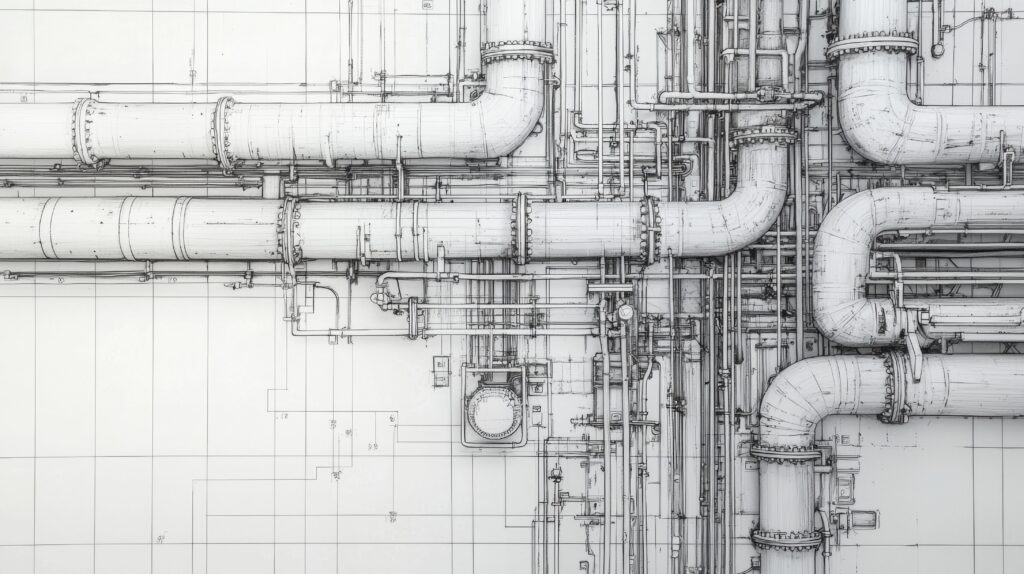
The following illustration provides a general example of a plumbing diagram.
How Apartment Plumbing Systems Are Designed
Apartment plumbing systems are designed to distribute water and remove wastewater for multiple residential units within the same property. While layouts vary depending on building size and structure, most systems follow a consistent design that includes water supply lines, plumbing risers, branch drains, and vertical drainage stacks.
An apartment plumbing diagram often illustrates how these components work together to supply water to individual units while carrying wastewater away through the building’s main drainage infrastructure.
Townhouse-Style Apartment Plumbing
Some apartment communities are designed with townhouse-style units where each residence may have its own water service and sewer connection. In these layouts, plumbing systems function similarly to single-family homes.
An apartment plumbing diagram for townhouse communities typically shows separate supply and drainage lines serving each individual unit while still connecting to a shared municipal sewer system.
Multi-Family Building Plumbing Systems
Many apartment properties contain multiple units within the same structure. In these buildings, apartments connect to branch plumbing lines that feed into larger vertical drain stacks located inside the walls of the building.
In a typical apartment plumbing diagram for these properties, fixtures connect to branch drains that carry wastewater to a vertical stack. The stack transports wastewater downward through the building to the main sewer line.
Because multiple apartments share these stacks, blockages or pipe failures can sometimes impact several units.
Large Apartment Complex Plumbing Infrastructure
Larger apartment complexes rely on centralized plumbing infrastructure designed to serve dozens or even hundreds of residential units. These systems commonly include main water supply risers that distribute water vertically through the building and large drainage stacks that collect wastewater from each floor.
An apartment plumbing diagram for these buildings typically illustrates multiple risers and drainage stacks working together to maintain water pressure and proper drainage throughout the property.
Drain Stacks in Apartment Buildings
Drain stacks are vertical pipes that carry wastewater from multiple apartments to the building’s main drainage system. Each unit connects to the stack through branch drain lines that transport wastewater from sinks, toilets, bathtubs, and other fixtures.
Because several apartments share the same stack, a blockage or pipe failure within this pipe can affect units above or below the damaged section.
Signs You Need Apartment Plumbing
Apartment plumbing systems often show warning signs before a larger failure occurs. Recognizing these indicators early helps prevent plumbing issues from spreading to additional units.
Common signs include:
- Water pressure suddenly dropping across several apartments
- Slow drains affecting multiple units
- Recurring drain clogs
- Water stains appearing on ceilings or shared walls
- Unusual pipe noises inside walls or mechanical rooms
- Sewer odors in hallways or common areas
- Water pooling in basements or utility areas
- Gurgling sounds coming from drains
- Plumbing backups affecting more than one apartment
Common Causes of Apartment Plumbing System Failures
Apartment plumbing systems experience heavy daily use because they serve multiple residents simultaneously. Over time, this constant demand can contribute to pipe deterioration or structural damage.
Several underlying conditions may cause plumbing problems.
Tree root intrusion can occur when roots enter underground sewer lines through small openings. As roots expand, they can restrict or block wastewater flow.
Pipe corrosion is another common issue, especially in older metal piping systems. Corrosion can weaken pipe walls and eventually lead to leaks or collapse.
Other potential causes include:
- Mineral scale buildup inside pipes
- Pipe offsets caused by ground movement
- Internal corrosion weakening pipe structure
- Pipe cracking from age or pressure changes
- Collapsed sections of underground piping
Identifying these conditions often requires professional evaluation of the plumbing system.
What Are the Benefits of Apartment Plumbing?
Professional apartment plumbing services help maintain the safety and reliability of multi-unit residential plumbing systems.
Benefits include:
- Reliable water supply to all units
- Improved drainage performance
- Reduced risk of plumbing failures affecting multiple apartments
- Faster response to tenant plumbing issues
- Identification of hidden pipe damage
- Prevention of recurring plumbing problems
- Confirmation that plumbing infrastructure is functioning properly
How Arrow Performs Apartment Plumbing
Apartment plumbing work requires careful coordination to minimize disruption for residents while ensuring the plumbing system operates properly.
- Assessment
Technicians evaluate the affected plumbing system and identify which areas of the building are experiencing problems. - Diagnostics
If structural issues are suspected, sewer scope inspection for residential properties or CCTV sewer inspection for commercial properties may be used to evaluate internal pipe conditions. - Service Execution
Repairs are performed based on the confirmed diagnosis. Depending on pipe condition, solutions may include trenchless sewer repair, sewer repair or replacement, or excavation. - Verification
After repairs are completed, the plumbing system is tested to confirm proper water flow and drainage. - Cleanup
Work areas are restored and the plumbing system is returned to normal operation.
To schedule apartment plumbing service, call (908) 595-1597.
Why Choose Arrow Sewer & Drain for Apartment Plumbing
Property managers and building owners trust Arrow Sewer & Drain for dependable plumbing services throughout New Jersey.
Reasons customers choose our team include:
- Experience servicing multi-unit residential plumbing systems
- Advanced diagnostic equipment
- Technicians trained in complex plumbing infrastructure
- Responsive service scheduling
- Clear communication with property managers
- Reliable long-term repair solutions
Related Services
Apartment plumbing systems often connect to broader building plumbing infrastructure. In some cases, additional services may be required to restore proper drainage flow or evaluate interior piping within multi-unit properties.
Frequently Asked Questions About Apartment Plumbing
Can plumbing problems in one apartment affect other units?
Yes. Because apartment buildings often share plumbing infrastructure, problems within a drain stack or supply line can sometimes affect multiple apartments.
Does clearing a blockage mean the pipe is fully repaired?
Not always. Clearing a blockage restores drainage but does not necessarily confirm the structural condition of the pipe.
When do apartment plumbing problems affect multiple units?
Apartment plumbing systems often share drain stacks and supply lines. When a blockage or pipe issue occurs within these shared systems, it can sometimes affect apartments located above, below, or adjacent to the affected area.
How are plumbing problems diagnosed in apartment buildings?
Technicians typically begin by evaluating the plumbing fixtures and drain lines within the affected unit. If the issue appears to involve shared infrastructure, further evaluation of branch drain lines, plumbing stacks, or interior building drains may be necessary to identify the source of the problem.
Can older apartment buildings develop plumbing system deterioration?
Yes. Over time, plumbing systems in older apartment buildings may experience corrosion, scale buildup, or pipe deterioration. Regular inspections and maintenance help identify these issues early before they lead to larger plumbing failures.
Call Now for Apartment Plumbing in New Jersey
Apartment plumbing systems require proper diagnosis and professional repair to maintain safe and reliable operation for residents. Whether addressing leaks, drainage problems, or structural pipe damage, our team provides dependable apartment plumbing services for multi-unit residential properties throughout New Jersey. Accurate evaluation helps determine the most effective repair approach and prevent recurring issues.