Internal Epoxy Pipe Coating for Small-Diameter Pipes and Stacks
Epoxy pipe coating is a trenchless rehabilitation method used to restore aging or internally deteriorated piping without excavation. Many New Jersey properties still rely on cast-iron, galvanized, or steel systems that corrode from the inside out. Creating an epoxy coated pipe interior restores flow and protects against further corrosion. This page explains how epoxy pipe coating works, when it is appropriate, and how structural evaluation determines whether coating or a more extensive repair solution is required.
Proper diagnosis determines whether coating alone is sufficient for long-term correction.
Epoxy Pipe Coating vs. Pipe Replacement
Epoxy pipe coating is a surface rehabilitation method typically performed using spray or brush application inside smaller diameter pipes and vertical stacks. It restores the internal surface but does not add structural thickness to the pipe wall.
Epoxy pipe coating is designed for pipes that remain structurally intact but are deteriorating internally. It rehabilitates the interior surface without removing the pipe itself.
Pipe replacement is necessary when structural integrity has been compromised.
The difference comes down to verified pipe condition.
When Epoxy Pipe Coating Is Appropriate
Epoxy coating may be recommended when:
- Internal corrosion is present
- Scale buildup has narrowed pipe diameter
- Minor surface cracking exists
- Pin-hole leaks are forming
- The pipe remains aligned and structurally stable
In these cases, forming an epoxy coated pipe barrier can extend service life while avoiding excavation.
When Trenchless Pipe Lining Is Recommended
If inspection reveals moderate structural deterioration, trenchless pipe lining may be more appropriate. Unlike thin-film epoxy coating, trenchless pipe lining creates a thicker structural liner that reinforces the host pipe.
Unlike thin-film epoxy coating applied by spray or brush, trenchless pipe lining creates a thicker structural liner inside the host pipe, reinforcing weakened pipe walls and restoring structural integrity.
This option is often selected when:
- Cracking is more advanced
- Minor offsets are present
- Reinforcement is required
When Sewer Line Replacement Is Necessary
If evaluation reveals collapse, severe offsets, root intrusion, or structural failure, coating is no longer viable. In those cases, trenchless pipe replacement, sewer repair, sewer line replacement, or excavation may be required.
Replacement becomes necessary when:
- Pipe sections have collapsed
- Structural alignment is compromised
- Extensive root intrusion has occurred
- Long segments have deteriorated beyond rehabilitation
A sewer camera inspection confirms whether epoxy pipe coating is appropriate or whether trenchless sewer repair or sewer line repair or replacement is required.
What Is Epoxy Pipe Coating?
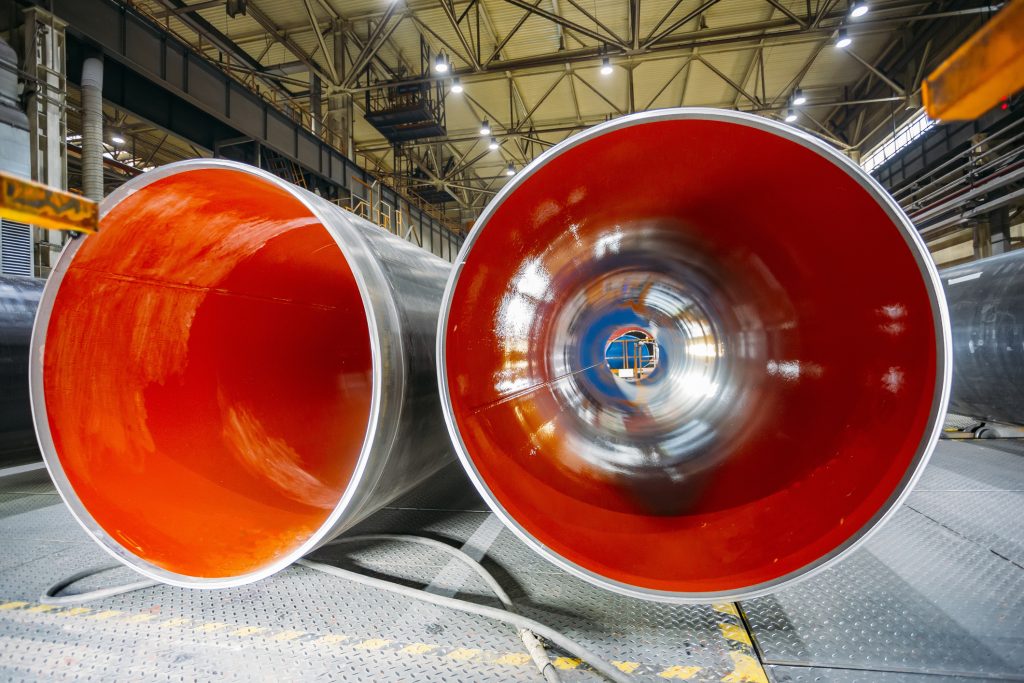
Epoxy pipe coating is a non-invasive rehabilitation method used primarily in smaller diameter piping systems and vertical stacks. Rather than inserting a structural liner, this process applies a specialized epoxy resin directly to the interior pipe surface using spray coating or brush coating techniques.
The epoxy bonds to the pipe wall, forming a smooth, corrosion-resistant internal barrier. This method is most commonly used in:
- Vertical drain stacks
- Smaller diameter branch lines
- Interior cast-iron piping
- Galvanized supply lines
- Commercial riser systems
Epoxy coated pipe systems improve flow by smoothing the interior surface and sealing minor corrosion or pitting. However, this method does not structurally reinforce the pipe the way trenchless pipe lining does.
Because this is a surface-applied rehabilitation method, structural integrity must be confirmed before application. A sewer camera inspection may be recommended to evaluate cracking, corrosion depth, offsets, and root intrusion to determine whether trenchless sewer repair or sewer repair or replacement is required instead.
Before rehabilitation, internal corrosion and scale buildup can significantly restrict flow inside vertical stacks and branch lines.
Signs You Need Epoxy Pipe Coating
- Rust-colored or discolored water
- Recurring minor leaks
- Reduced water pressure
- Frequent internal scale buildup
- Aging cast-iron or galvanized piping
- Interior corrosion identified during inspection
- Pin-hole leaks along pipe runs
- Minor cracking without collapse
- Repeated drain backups suggesting internal deterioration
Some of these symptoms may also indicate deeper structural conditions requiring further evaluation.
What Causes These Problems?
Internal pipe deterioration develops gradually. In many New Jersey systems, aging materials combined with water chemistry contribute to corrosion and scale buildup.
Common causes include:
- Corrosion from mineral content
- Scale buildup restricting diameter
- Cracking from age and stress
- Root intrusion in buried sewer lines
- Offsets caused by soil movement
- Partial collapse in severely deteriorated segments
Identifying whether these conditions are surface-level or structural often requires internal evaluation. Coating is only appropriate when the pipe remains structurally viable.
What Are the Benefits of Epoxy Pipe Coating?
- Ideal for smaller diameter pipes and vertical stacks
- Non-invasive spray or brush application
- Extends service life of structurally sound piping
- Restores internal pipe diameter
- Creates a corrosion-resistant barrier
- Extends service life of aging piping
- Minimizes disruption compared to excavation
- Reduces recurring minor leaks
- Improves hydraulic performance
- Confirms internal condition when paired with inspection
When properly applied to structurally sound piping, epoxy pipe coating can provide long-term system protection.
How Arrow Performs Epoxy Pipe Coating
- Assessment
We evaluate pipe age, material type, and reported symptoms. - Diagnostics
A sewer camera inspection may be performed to assess corrosion, cracking, root intrusion, and structural alignment. This determines whether epoxy pipe coating is viable or if trenchless pipe lining, Trenchless pipe replacement, sewer repair, or excavation is necessary. - Pipe Preparation
The pipe interior is mechanically cleaned to remove corrosion and scale buildup to ensure proper bonding. - Epoxy Application
A uniform epoxy coating is applied to create a smooth internal epoxy coated pipe barrier. Fusion bonded epoxy pipe coating methods may be used when appropriate. - Verification & Cleanup
After curing, the pipe is reinspected to confirm coating integrity and system performance.
To schedule an evaluation, call (908) 595-1597.
Why Choose Arrow Sewer & Drain for Epoxy Pipe Coating
- Trenchless rehabilitation specialists
- Structured diagnostic process
- Residential and commercial service capability
- Advanced inspection equipment
- Clear repair hierarchy recommendations
- Focus on long-term system performance
Professional application ensures proper preparation, uniform coating thickness, and verified performance.
Related Services
Internal epoxy pipe coating is a rehabilitation method for small-diameter drain lines and vertical stacks. Related services focus on proper preparation, inspection, and determining when structural replacement is necessary.
- Hydro jetting sewer lines – Used to remove internal scale, corrosion buildup, and debris from small-diameter lines prior to epoxy application, ensuring proper surface preparation and adhesion.
- Sewer scope inspection – For residential properties, confirms internal corrosion, pitting, or scaling in branch drains and stacks before recommending epoxy rehabilitation.
- CCTV sewer inspection – For commercial properties, evaluates stack systems and interior drain lines to determine whether epoxy coating is appropriate or if structural correction is required.
- Trenchless pipe repair – Recommended when interior pipe walls are too deteriorated for coating and require trenchless pipe lining or Trenchless pipe replacement instead.
- Sewer line repair – Necessary when structural failure, separation, or collapse prevents internal coating and requires section replacement
Each service is selected based on confirmed pipe condition and structural evaluation.
After proper rehabilitation and verification, the piping system operates with restored internal protection and improved flow.
Frequently Asked Questions About Epoxy Pipe Coating
Does epoxy pipe coating repair structural collapse?
No. Coating addresses corrosion and minor surface deterioration. Collapsed or severely misaligned pipes require trenchless pipe replacement, sewer line replacement, or excavation.
If flow improves after cleaning, is the pipe fully repaired?
Improved flow does not confirm structural integrity. A sewer camera inspection helps determine whether coating is appropriate.
How does epoxy pipe coating differ from trenchless pipe lining?
Epoxy coating forms a protective barrier, while trenchless pipe lining creates a thicker structural liner capable of reinforcing weakened pipe walls.
When is sewer line replacement required instead of coating?
Replacement is necessary when structural failure, collapse, severe offsets, or extensive root intrusion are present.
Is residential excavation ever necessary?
Excavation may be required if trenchless methods are not viable or if pipe access is limited.
How long does epoxy coated pipe last?
Longevity depends on original pipe condition, preparation quality, and environmental factors. When properly applied to structurally sound piping, coating significantly extends service life.
Call Now for Epoxy Pipe Coating in New Jersey
If your property has aging or internally corroded piping, epoxy pipe coating may provide a trenchless rehabilitation solution. Our team evaluates structural conditions, confirms eligibility, and determines whether coating, trenchless sewer repair, sewer repair, or sewer line replacement is appropriate.
We serve residential and commercial properties across New Jersey with structured diagnostics and long-term correction strategies. Call (908) 595-1597 today to schedule your estimate and protect your piping system with confidence.