New Jersey Sewer Line Repair
Sewer line repair restores damaged underground sewer piping that carries wastewater from residential and commercial properties to municipal sewer systems. Across New Jersey, aging clay and cast-iron sewer lines, soil movement, and root intrusion frequently cause structural deterioration.
24/7 Emergency Sewer Line Repair
A sewer line emergency occurs when wastewater backs up into fixtures, floor drains, or lower-level spaces. Active sewage exposure, strong odors, or standing wastewater require immediate attention to prevent property damage and health risks.
Emergency service focuses first on stabilizing the situation and restoring controlled flow. Once conditions are safe, structural evaluation determines what repair is required.
Review our Trenchless Sewer Repair Special
Need Emergency Sewer Line Repair?
If you are experiencing an active sewer backup, call Arrow Sewer and Drain for immediate assistance.
NJ Master Plumber License # 36BI01352100
Call (908) 595-1597
What Is Sewer Line Repair?
Sewer line repair addresses structural damage within the main underground sewer pipe serving a property. This includes buried laterals connecting homes, commercial buildings, and multi-unit properties to public sewer mains.
This sewer repair service corrects cracking, corrosion, joint separation, root intrusion, scale buildup, pipe offsets, and partial collapse. Its purpose is to restore structural integrity and ensure reliable wastewater transport.
Sewer line repair does not simply clear a blockage. Clearing restores temporary flow, but structural deterioration requires targeted correction.
Restoring flow alone does not confirm pipe condition. A sewer camera inspection is often recommended to evaluate structural integrity and determine whether trenchless sewer repair or sewer repair or replacement is necessary.
Signs of a Failing Sewer Line:
Not sure whether what you’re seeing is a sewer issue? Slow drains across multiple fixtures, persistent sewage smells, unexplained wet spots in the yard, and rising water bills are some of the most common indicators. Our guide to signs of a leaking sewer line walks through each warning sign and what it typically points to.
Sewer Inspection Guide:
For a deeper look at how a sewer inspection can show where a sewer line has failed — what a camera reveals about both the pipe and the soil supporting it, and how to evaluate any inspection report — see our complete guide to what sewer inspection cameras actually show.
What Causes Sewer Line Failure?
Sewer line failure in New Jersey is commonly caused by aging infrastructure. Clay pipes separate at joints, while cast-iron pipes corrode internally over time.
Root intrusion is a major contributor. Tree roots enter small openings and expand, leading to cracking or collapse.
Seasonal soil movement and freeze-thaw cycles place stress on underground piping, creating offsets or fractures.
Scale buildup, corrosion, and internal deterioration restrict flow and weaken pipe walls. In severe cases, sections of pipe may partially or fully collapse.
Identifying root intrusion, cracking, corrosion, offsets, or collapse typically requires structural evaluation through sewer scope inspection for residential properties or CCTV sewer inspection for commercial properties.
Related Sewer Line Repair Services
Sewer line repair is often part of a broader diagnostic and structural correction process.
Sewer Scope Inspection
Provides interior video evaluation of sewer piping. Identifies cracks, offsets, corrosion, and root intrusion.

CCTV Sewer Inspection
Used for larger-diameter commercial sewer systems. Evaluates high-capacity pipelines.

Sewer Repair
Repairs damaged sewer lines through excavation or trenchless methods to restore proper wastewater flow and function.

Hydro Jetting Sewer Lines
Clears sewer lines using high-pressure water to remove grease, sludge, and debris buildup effectively.

Orangeburg Pipe Replacement
Replaces deteriorated Orangeburg sewer pipes with durable materials to restore structural integrity and flow.

Main Sewer Line Repair
Repairs commercial main sewer lines in streets to restore flow using excavation or trenchless methods.

Trenchless Sewer Repair
Restores damaged sewer lines using trenchless methods to repair structural issues without major excavation.

Trenchless Pipe Lining
Restores damaged sewer pipes internally using cured-in-place lining without excavation or surface disruption.

Trenchless Pipe Replacement
Replaces damaged sewer lines by breaking and expanding old pipe while installing new line underground.
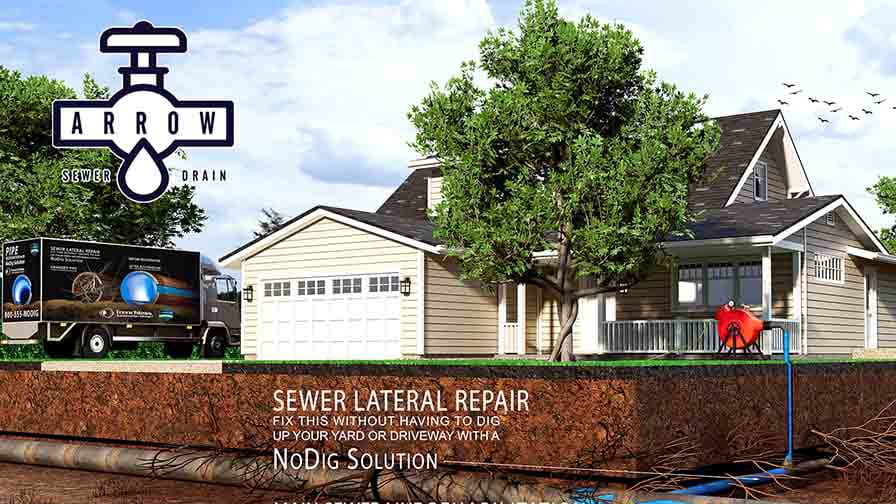
Epoxy Pipe Coating
Applies protective epoxy coating inside pipes to seal leaks, prevent corrosion, and extend service life.
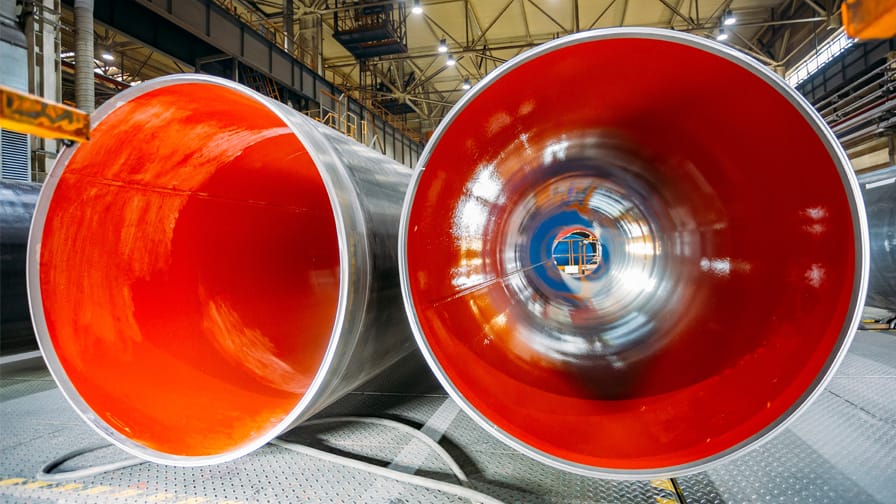
Excavation
Performs controlled excavation to access, repair, or replace underground plumbing and sewer infrastructure systems.

Hydro Excavation
Uses pressurized water and vacuum systems to safely expose underground utilities with minimal disruption.

Drilling Contractor
Directional drilling, HDD, and utility access services supporting sewer and water infrastructure installation.
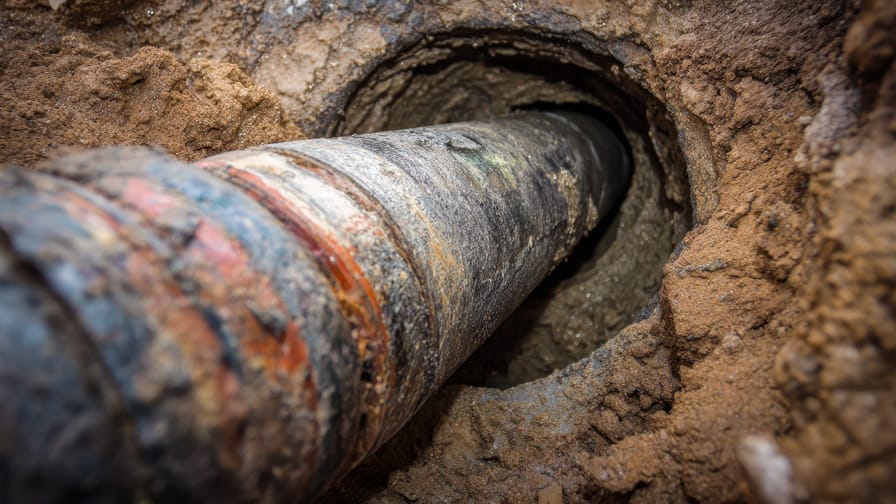
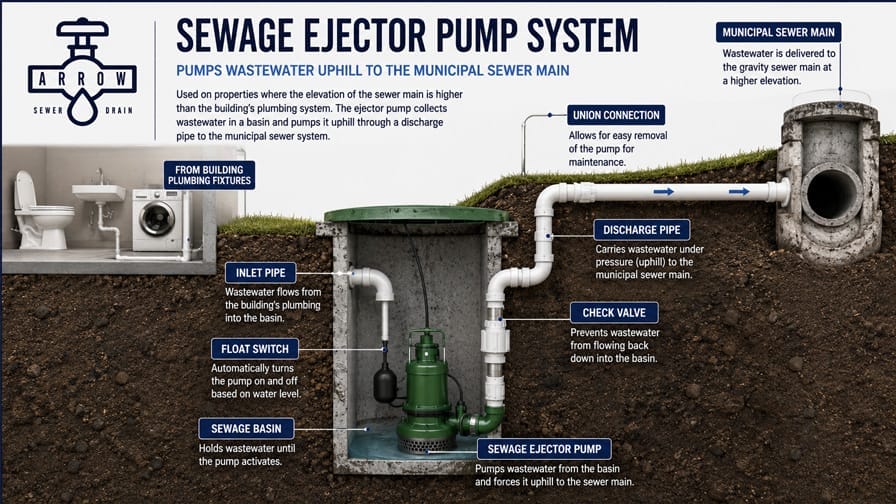
Sewage Ejector Pump Installation
Install or replace a sewage ejector pump that moves wastewater uphill to the municipal sewer main.
Sewage Ejector Pump Backup
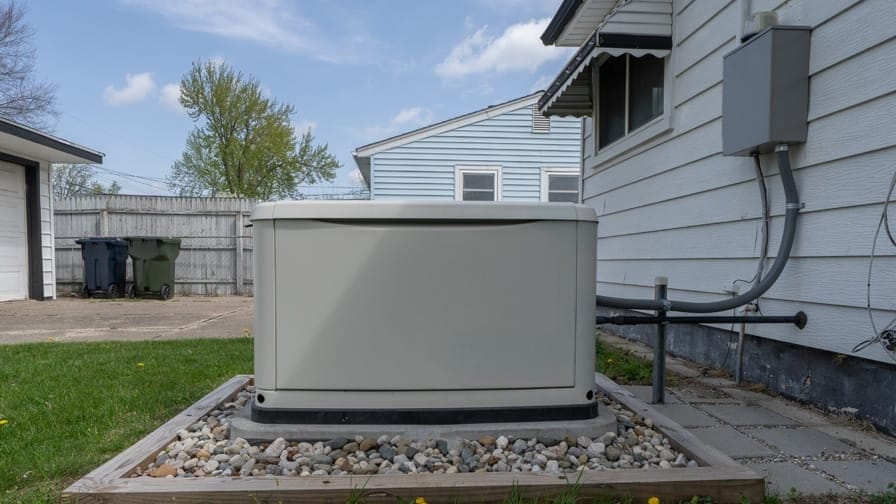
Keep sewage ejector pumps running during NJ power outages with dedicated backup generator connection service.
Backup Generator Service
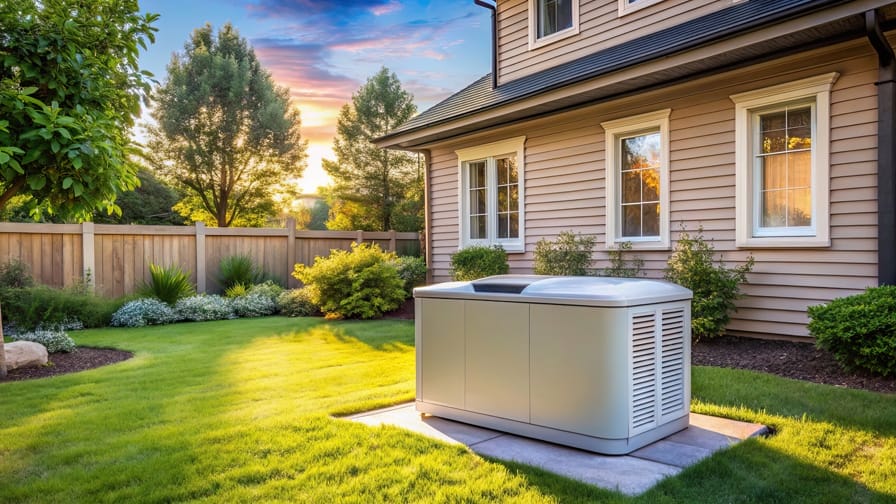
Whole-house standby generator installation including sump pump, ejector pump, and backwater valve protection.
Sewer Backup Valve Installation
Protects New Jersey properties from sewage backups caused by storms, flooding, and sewer surcharge conditions.

How to Determine if You Need Sewer Line Repair
Sewer line problems usually show up as patterns, not just one isolated issue. If you’re trying to understand how to tell if a sewer line may be damaged, focus on how often the problem happens, where it’s occurring, and whether conditions are changing over time.
Step 1: Check if Multiple Fixtures Are Affected
If more than one drain, toilet, or fixture is slow or backing up at the same time, the issue may extend beyond a single pipe and involve the sewer line serving the property.
Step 2: Notice if Problems Keep Coming Back
Recurring clogs or backups that return after being cleared often indicate buildup, restriction, or structural damage that hasn’t been addressed.
Step 3: Look for Outdoor Warning Signs
Sewage odors, soggy or sunken areas in the yard, or wastewater near exterior cleanouts are common signs that something below ground may be leaking or failing.
Step 4: Pay Attention to Where and How the Problem Appears
A single slow drain may point to a localized issue, while widespread drainage problems, gurgling sounds, or sudden performance drops across the building are more consistent with sewer line involvement.
Step 5: Use Inspection to Confirm the Condition
Symptoms can point you in the right direction, but they don’t confirm the exact problem. A sewer inspection is needed to determine whether the sewer line is blocked, damaged, or structurally compromised before repair decisions are made.
What Are the Benefits of Sewer Line Repair?
Restores underground pipe structural integrity
Prevents recurring sewage backups
Protects foundations and surrounding soil
Improves long-term wastewater flow reliability
Confirms system condition through diagnostic evaluation
Supports property value protection

Sewer Line Replacement In New Jersey
Sewer line repair is appropriate when the existing pipe maintains structural shape and can be rehabilitated. However, some conditions require full sewer line replacement.
Replacement may be necessary when:
- The pipe has fully collapsed
- Severe offsets prevent proper flow
- Advanced corrosion has compromised pipe walls
- Orangeburg pipe has flattened or deformed
- Multiple sections have deteriorated beyond rehabilitation
In these cases, trenchless pipe replacement may be viable. If structural conditions prevent trenchless correction, traditional sewer line replacement through excavation may be required.
A sewer camera inspection determines whether repair or sewer line replacement is the appropriate long-term solution.
How Arrow Performs Sewer Line Repair and Replacement
- Assessment – Technicians evaluate reported symptoms, plumbing history, and visible site conditions to identify potential structural sewer concerns.
- Diagnostics – A sewer camera inspection evaluates internal pipe condition, identifying cracking, corrosion, root intrusion, offsets, or collapse. This determines whether sewer line repair or sewer line replacement is the appropriate long-term solution.
- Solution Determination – If the pipe maintains structural shape, trenchless pipe lining may be viable. When deterioration is more advanced, trenchless pipe replacement may be recommended. If collapse or severe misalignment prevents trenchless correction, traditional sewer line replacement through excavation or hydro excavation may be required.
- Service Execution – The selected repair or replacement method is performed using controlled procedures to restore structural integrity and reliable wastewater flow.
- Verification & Site Restoration – Post-service inspection confirms proper alignment and flow. Work areas are stabilized and restored appropriately.
Why Choose Arrow Sewer & Drain for Sewer Line Repair And Replacement
- Specialized expertise in underground sewer infrastructure
- Service for both residential and commercial properties
- Structured diagnostic-first repair approach
- Capability to perform trenchless and traditional methods
- Clear communication regarding repair hierarchy
- 24/7 emergency availability
Financing For Your Sewer Line Repair in New Jersey
The team at Arrow Sewer & Drain has garnered a reputation for professionalism and reliability over the years, making us one of the most trusted partners for commercial and residential customers throughout the all of New Jersey area.
Learn more about financing options for your sewer line repair.
Nearby Service Locations To Support You
Are you looking for Sewer Line Repair in New Jersey? We can provide you service from:
Middlesex County, NJ
We serve Middlesex County from our offices in Middlesex, NJ and South Plainfield, NJ.
Somerset County, NJ
We serve Somerset County from our offices in Basking Ridge, NJ, and Bound Brook, NJ.
Frequently Asked Questions About Sewer Line Repair
What is the difference between sewer line repair and sewer line replacement?
Sewer line repair corrects isolated structural defects when the pipe maintains overall shape. Sewer line replacement involves removing and replacing sections or the entire pipe when collapse, severe corrosion, or deformation prevents rehabilitation. A sewer camera inspection determines the appropriate solution.
Does clearing a sewer line mean it is fully repaired?
No. Clearing restores flow but does not correct structural defects such as cracking, corrosion, or root intrusion. A sewer camera inspection is required to confirm pipe condition.
Who is responsible for sewer line repair in New Jersey?
In most cases, property owners are responsible for the sewer lateral running from the building to the municipal sewer main. The municipality typically maintains the public sewer main in the street. A sewer camera inspection can confirm where the failure is located.
When is trenchless pipe lining recommended instead of sewer line replacement?
Trenchless pipe lining is appropriate when the pipe maintains structural shape but has cracking, corrosion, or root intrusion. If the pipe is collapsed or severely offset, trenchless pipe replacement or sewer line replacement may be required.
When is excavation necessary for residential sewer repair?
Excavation is necessary when structural collapse or severe misalignment prevents trenchless correction. Direct access may be required to remove and replace damaged sections.
Can commercial sewer lines be repaired using trenchless methods?
Yes. Many commercial sewer systems can be rehabilitated using trenchless pipe lining or trenchless pipe replacement depending on pipe condition and diameter.
Is sewer line repair disruptive to landscaping?
When trenchless sewer repair is viable, surface disruption is minimized. If excavation is required, digging is targeted to the affected area.
 Call Now: (908) 595-1597
Call Now for Fast Sewer Line Repair in New Jersey
If you are experiencing recurring backups, slow drainage, or suspected structural sewer damage, professional evaluation is critical. Sewer line repair begins with accurate diagnosis to determine whether trenchless pipe lining, trenchless pipe replacement, sewer repair, or excavation is necessary. Arrow Sewer & Drain provides structured assessment and long-term correction for residential and commercial properties throughout New Jersey.