A sewer backup is one of the worst things a homeowner can walk into. The smell, the standing water, the panic of not knowing how bad it is or how much it’s going to cost — it’s overwhelming. If you’re dealing with one right now, take a breath. This guide will walk you through exactly what to do in the next hour, what causes these backups in the first place, and how to make sure it doesn’t happen again.
First Things First: Stop Using Water
The moment you notice sewage coming up through a floor drain, toilet, tub, or basement fixture, stop running water anywhere in the house. That means no flushing toilets, no running the dishwasher, no laundry, no showers. Every gallon of water you send down the drain has nowhere to go but back up into your home.
Next, keep people and pets away from the affected area. Raw sewage contains bacteria, viruses, and parasites that can make you seriously ill. If the backup is severe or has reached electrical outlets, shut off power to that area at the breaker before going near it.
Then call a sewer backup plumber. This is not a “wait until morning” situation — the longer sewage sits, the more damage it does to your floors, walls, and belongings, and the higher the risk of mold within 24 to 48 hours.
What Would Cause a Sewer Backup?
Understanding the cause helps you (and your plumber) figure out the fastest path to a fix. The most common culprits:
Tree roots. Roots are the number one cause of sewer line failures in older neighborhoods. They sense moisture and nutrients in your sewer pipe and grow right through tiny cracks or joints, eventually creating a dam that catches everything flushed down the line.
Grease, wipes, and “flushable” products. Grease cools and hardens inside your pipes. So-called flushable wipes don’t break down. Combined with hair, food scraps, and toilet paper, these create thick clogs that block the entire line.
Heavy rain and flooding. A flood sewer backup happens when the municipal sewer system gets overwhelmed during heavy storms. When the city’s main line is full, wastewater flows backward into the lowest connected fixture in your house — which is almost always in the basement.
Collapsed or broken pipes. Older homes often have clay, cast iron, or Orangeburg pipes that crack, corrode, or collapse with age. Once that happens, even normal household waste can’t move through.
A clog in the main line. Individual drains back up into individual fixtures. When the main sewer line clogs, you’ll see backups in multiple fixtures at once — that’s the telltale sign you’re dealing with a sewer issue and not just a slow drain.
Cleaning Sewer Backup in Basement Areas
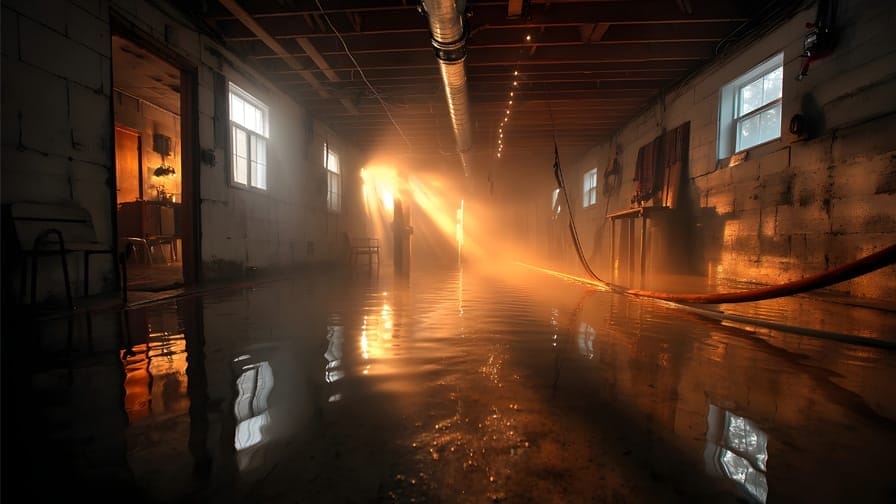
Basement cleanup is its own ordeal. Once a licensed plumber has cleared the line and stopped the flow, you can start dealing with the mess — but only with the right gear and the right approach.
Wear waterproof boots, heavy gloves, eye protection, and an N95 mask at minimum. Open windows and run fans to ventilate. Remove standing water with a wet/dry shop vac (never a regular household vacuum), and bag up anything porous that got soaked: cardboard boxes, drywall, carpet, padding, particleboard furniture, and most upholstered items. These materials trap bacteria and almost never come fully clean.
Hard surfaces — concrete, tile, sealed wood — can be scrubbed and disinfected with a strong cleaner, then a bleach solution (one cup of bleach per gallon of water). Let everything dry completely before bringing items back into the space.
If the backup covered more than a small area, or if it soaked into walls or subflooring, this is the point where most homeowners call in a sewer backup restoration company. They have industrial dehumidifiers, antimicrobial treatments, and the ability to document everything for your insurance claim. Speaking of which: photograph everything before you throw it out. Your homeowner’s policy may cover the loss, especially if you have a sewer backup rider.
How to Prevent the Next Sewer Backup
Once you’ve been through one sewer backup, you do not want a sequel. A few things make a real difference:
- Get your main line cleaned before there’s a problem. Most homes benefit from professional drain cleaning every 18 to 24 months, sooner if you have mature trees in the yard.
- Install a backwater valve. This one-way valve sits on your main sewer line and prevents municipal sewage from flowing backward into your home during heavy storms. Some towns even offer rebates for installation.
- Be careful what you flush. The only things that should go down a toilet are human waste and toilet paper. Wipes — even the “flushable” kind — paper towels, feminine products, and dental floss all cause clogs.
- Never pour grease down the drain. Let it cool and throw it in the trash.
- Watch for early warning signs. Slow drains in multiple fixtures, gurgling toilets, water backing up in the tub when you run the washing machine, or a soggy patch in the yard over your sewer line all suggest a partial clog that’s going to become a full one.
When to Call a Pro
Some clogs really are a plunger-and-a-bottle-of-drain-cleaner job. A sewer backup is not one of them. If you’re seeing wastewater coming up through fixtures, multiple drains running slow at once, or any sewage smell in the basement, you need professional equipment — a sewer camera to find the actual problem and a hydro-jetter or auger to clear it.
At Arrow Sewer and Drain, we’ve handled emergency sewer backup calls across New Jersey for years, and we know how stressful these situations are. Our team is available around the clock to clear blockages, camera-inspect your line to find the root cause, and get your home back to normal as quickly as possible. If you’re dealing with a backup right now — or you want to schedule preventive cleaning before one happens — our drain cleaning services page has more details on what we offer and how to reach us.
Don’t wait. The faster you act, the less damage you’ll deal with.