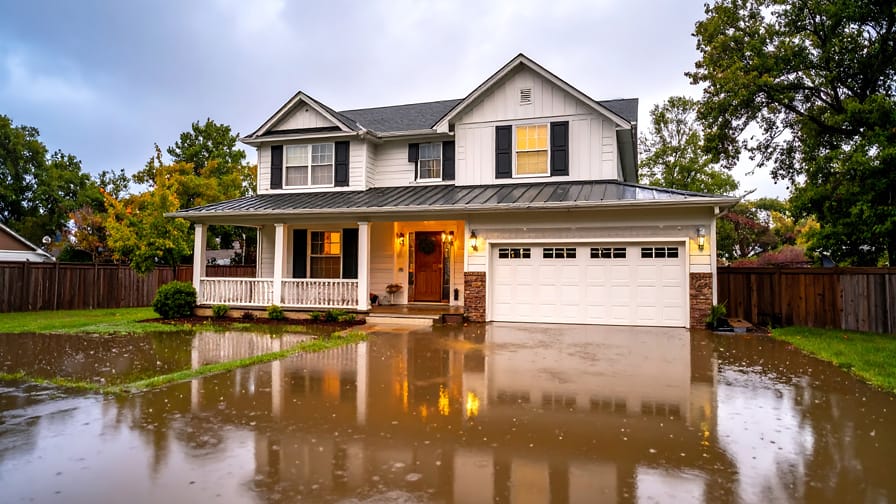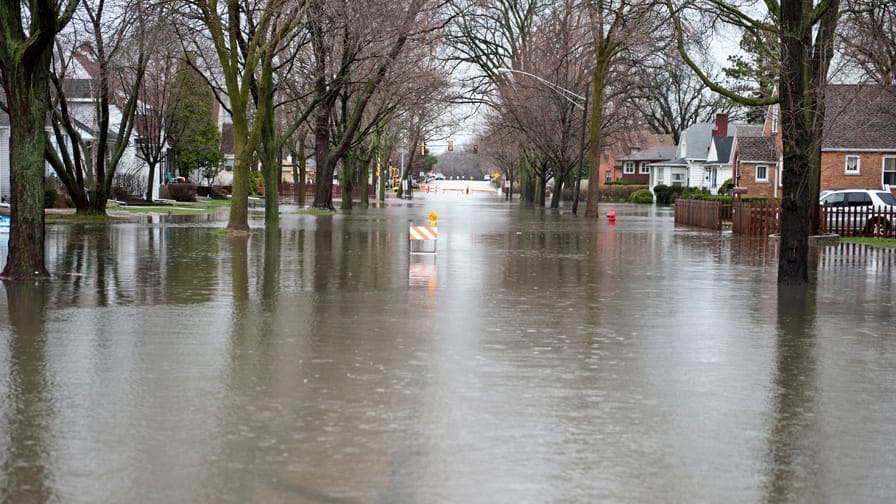
A New Jersey homeowner during Hurricane Ida loses power at 11 p.m. Within minutes, the sump pump stops cycling. The sewage ejector pump that lifts the home’s wastewater up to the municipal main goes silent. The well pump, on properties that depend on one, can no longer push water through the plumbing. The HVAC system shuts down. The refrigerator starts its slow climb toward room temperature. And in households with a family member who depends on an oxygen concentrator, a CPAP machine, or refrigerated medication, a battery timer begins running with a few hours on the clock.
A whole-house generator is the answer to this scenario — but only in part. The generator produces power. The connections between the generator and each of your home’s systems determine which ones stay functional during the outage. Most homeowners discover the gaps in their setup at the moment those gaps matter most.
This post is the power-side companion to our comprehensive guide on sewer backups during major storms, which covers why New Jersey homes are vulnerable to flood-driven backups in the first place. This one covers how to keep your property’s infrastructure running through the conditions that put it most at risk.
Your Home Runs on Power You Don’t Think About
A property’s infrastructure is more than a single system, and an outage doesn’t take any of it down gracefully. There are four pillars that go dark together when the power goes, and each one fails differently.
Drainage. A sump pump removes groundwater that accumulates around the foundation during heavy rain. The harder it’s raining, the harder the pump works. When power stops, water starts winning — and during the storms that produce the most groundwater, restoration is often hours or days away. Basement flooding from groundwater intrusion is one of the two most common outcomes of an unprotected outage in New Jersey.
Wastewater. For homes whose sewer line exits below the grade of the municipal main, the ejector pump isn’t just moving waste uphill — it’s actively preventing backflow from the municipal system into the home. When the pump stops, the home loses both the ability to move wastewater out and its primary defense against the municipal main pushing sewage back in. During major storms, those are usually the same event.
Water supply. Homes on a private well lose all running water when the well pump loses power — drinking, cooking, sanitation, and any plumbing that depends on pressurized supply. Homes on municipal water are unaffected, but the well-pump dependency is often overlooked in generator planning until an outage exposes it.
Critical electrical loads, including life-safety equipment. Some homes need power during outages for reasons that go beyond comfort or property protection. Oxygen concentrators, CPAP and BiPAP machines, home dialysis equipment, hospital beds, powered wheelchairs, suction units, IV pumps, and refrigerated medications all require continuous electricity for a patient to remain safely at home. For households caring for an elderly family member, an in-home patient recovering from surgery, or someone in hospice care, an outage isn’t an inconvenience — it’s a medical event with a clock attached.
A whole-house generator is the power source. The connections between the generator and each of these pillars determine which ones stay functional during the outage.
Lessons from Ida, Henri, and Other Recent New Jersey Storms
The last decade of major storm events in New Jersey has produced a consistent set of failure patterns. We’ve seen each of them more than once in the basements we work in. Understanding them is the difference between a homeowner who plans a generator setup that holds and one who finds out what’s missing the hard way.
Battery-backup sump pumps discharging within hours. Most battery backup sump pump systems are rated for four to eight hours of pumping under typical groundwater inflow. During major storms with sustained high inflow, real-world performance is often shorter. Homeowners who believed they were protected by battery backup discovered the battery was exhausted while utility restoration was still 24 to 48 hours away. The basement filled regardless.
Below-grade homes losing the ejector during municipal surcharge. Homes where the sewer line exits below the grade of the municipal main rely entirely on the ejector pump to move household wastewater uphill into the city’s system. When the pump lost power during the storm itself, the same conditions caused the municipal main to surcharge upstream. Within hours, sewage entered through the ejector pit or the lowest connected fixtures. The loss of pumping capacity and the loss of backflow defense happened simultaneously because they’re the same component.
Well-pump homes losing water supply for days. Regional outages following major storms routinely run three to five days in parts of New Jersey. Households on private wells without generator-backed pumps lost all running water for the duration. Generator owners who’d planned for refrigeration and HVAC but never wired in the well still found themselves hauling drinking water from neighbors or municipal distribution points.
Households with medical-dependent residents facing an impossible choice. Families caring for an elderly relative or a patient on home medical equipment found themselves watching battery reserves drain in real time. The decision became: transport a vulnerable person through an active storm to a hospital or care facility, or stay home and hope. For households where this risk had been anticipated and a generator-backed life-safety circuit was already in place, the storm became an inconvenience rather than a medical emergency.
Combined-failure homes. A subset of properties experienced everything at once — groundwater intrusion through the foundation, sewer backflow through the ejector pit, no working pumps, no drinking water on a well. These homes ended up uninhabitable for the duration of the outage and weeks of remediation afterward. They were not unlucky. They had specific configurations that failed in specific, predictable ways.
The homes that came through major storms without serious damage had three things in common: generator-backed pumps for the relevant infrastructure, a backwater valve where the configuration required one, and someone who’d tested the system before the storm hit.
The Core Components of a Whole-House Generator Setup
A whole-house standby generator is more than the unit itself. The complete setup has four interlocking components, each of which has to be sized and configured correctly for the system to work when called on.
The generator unit. Sits outside the home on a concrete pad, typically along a side or back wall near the gas meter and electrical service. Fueled by either natural gas (running continuously off the home’s existing gas line, where available) or propane (requiring a dedicated tank). Sized to the home’s actual electrical load based on a documented calculation, not an estimate.
The transfer switch. Moves the home’s electrical load from utility power to generator power when grid power fails, and back again when utility power returns. Automatic transfer switches handle the entire transition without homeowner intervention — the right choice for the storms that happen at 3 a.m. while no one is awake. Manual transfer switches require someone to physically operate them, which limits their usefulness in the scenarios that matter most.
The fuel system. Natural gas is the standard choice in most New Jersey municipalities with gas service, since it runs continuously without refueling. Propane is the alternative for homes without natural gas, with tank capacity sized to expected runtime.
The electrical tie-in and load prioritization. The load calculation identifies which circuits get backup power and how they’re prioritized. Homes with a critical-load panel get a subset of circuits; homes with a whole-house panel get everything within the generator’s capacity.
For the full technical breakdown of generator sizing, transfer switch configurations, and the assessment process, see our backup generator service page.
The Connections That Determine What Actually Gets Powered
A generator without the right connections is a generator that runs the lights while your basement floods or your patient’s oxygen concentrator times out. The connections are where infrastructure protection happens.
Life-safety and medical equipment circuits. For households with a resident who depends on powered medical equipment — oxygen concentrators, CPAP or BiPAP machines, home dialysis, hospital beds, powered mobility, refrigerated medications, suction units, IV pumps — a generator-backed circuit isn’t an upgrade. It’s the condition that allows the patient to remain at home during an outage rather than being transported to a hospital or care facility during a storm. The same applies to households providing in-home care for an elderly family member or a hospice patient. Most home medical equipment has battery backup measured in hours, sometimes less. A whole-house generator with the relevant circuits prioritized in the load calculation eliminates that countdown. This is the kind of decision worth discussing with both the patient’s physician and the installer — the physician identifies which equipment is non-negotiable, and the installer ensures those circuits sit on the generator-backed load list with sufficient capacity headroom for simultaneous draw. For households with a registered medical-priority designation through the utility, generator-backed power complements but doesn’t replace the registration — utility priority offers no protection during widespread storm-driven outages.
Sump pump backup generator connection. The most universally relevant connection for New Jersey homes with basements. The connection wires the home’s primary sump pump into the generator-backed load, so the pump continues cycling through the entire outage rather than relying on a battery that runs out hours in. For homes in any area that experiences sustained heavy rain — which is most of New Jersey — this is the connection that keeps the basement dry during the conditions that flood unprotected basements. Our sump pump backup generator connection page covers the install process; for homes that need a primary sump pump in the first place, see our sump pump installation services.
Sewage ejector backup generator connection. Some New Jersey homes have a sewer line that exits below the grade of the municipal sewer main — the entire home’s wastewater depends on a sewage ejector pump to lift it uphill into the city’s system. When the pump is running, wastewater flows out as it’s generated. When the pump stops, two problems arrive together: no household wastewater can leave the home, and the home loses its primary defense against the municipal main pushing sewage back down the lateral. During major storms — the same storms that cause power outages — municipal mains are often surcharged at the worst possible moment. Homes below grade without backup power to the ejector see sewer backups for the same reason any other home would, except the failure point is the ejector pit itself. For these properties, a generator-backed ejector connection isn’t about convenience. It’s about preventing a sewer backup during the exact conditions that cause one. See our sewage ejector pump backup generator connection page for the connection itself, and our sewage ejector pump installation page for properties that need the ejector system installed.
Well pump backup connection. For homes on private wells. Loss of well power means no drinking water, no plumbing pressure, no functional bathrooms, no fire suppression for properties with sprinklers, and no irrigation. Deep-well pumps also draw significant amperage on startup, which affects generator sizing — a well-pump connection isn’t a circuit you add at the end without revisiting the load calculation. Households on wells in Somerset County and parts of Middlesex County should treat the well pump as one of the first connections to plan around, not the last.
Converting a Sump Pump Battery Backup to Generator Power
Many New Jersey homeowners installed a battery-backup sump pump system before considering a whole-house generator. Once a generator is in place, the battery system’s purpose largely disappears for typical use cases.
A battery backup exists to bridge a power outage that would otherwise stop the primary sump pump. With a generator wired to the sump circuit, the primary pump runs on generator power for the entire outage duration. The battery never gets called on, and over time its monitoring, replacement, and maintenance become an expense without a corresponding return.
The conversion itself is straightforward: confirm the sump circuit is included on the generator-backed load list, verify the primary pump’s amperage matches the breaker rating, and decommission the battery system or retain it based on homeowner preference. There are situations where keeping the battery makes sense — homes with a history of extended multi-day outages, properties where the generator might be offline for service during a storm window, or households that simply prefer a third tier of backup. For most homes, retiring the battery system once the generator is in place is the reasonable choice.
How to Figure Out Which Connections Your Property Needs
Every property’s infrastructure profile is different. The right set of connections depends on which pillars matter for your home. A short list of diagnostic questions:
- Does anyone in the home depend on powered medical equipment — oxygen, CPAP, dialysis, IV pumps, hospital beds, refrigerated medications, or other equipment that supports their ability to remain at home? If yes, a generator-backed life-safety circuit moves from “nice to have” to a planning requirement. Outages don’t accommodate medical schedules.
- Do you have a finished basement or any below-grade living space that would be damaged by water intrusion?
- Does your home’s sewer line exit below the grade of the municipal sewer main? If you have a sewage ejector pump handling all household wastewater, the answer is yes — and a generator-backed connection isn’t optional, because the ejector is your primary defense against the municipal main backing sewage into your home during the outages that storms cause.
- Are you on a private well or municipal water?
- How long do storm outages typically last in your area, and how recently has your neighborhood experienced an extended outage?
- Have you ever experienced a basement flood or sewer backup?
Each “yes” maps to a specific connection that matters for your property. There is no universal answer.
For properties with a sewer line below the grade of the municipal main, the generator-backed ejector and a backwater valve are complementary defenses, not redundant ones. The ejector protects the pit and maintains pumping capacity through the outage. The backwater valve installation protects the main lateral against municipal sewer pressure reversal — a failure mode the generator can’t address on its own. Homes that have experienced flood-driven backups typically need both for full protection.
When to Call Arrow
Reach out for an infrastructure-level assessment if:
- You’re planning a first generator install and want the full picture, not just a generator quote
- You have an existing generator that doesn’t cover the sump pump, ejector pump, or well pump
- Your battery-backup sump pump system is aging and due for replacement
- A recent storm exposed gaps in your current setup
- Your property is below the grade of the municipal main and doesn’t have a generator-backed ejector
- A household member depends on home medical equipment and your current backup power plan has gaps
The first step of any install is an assessment of your property’s actual infrastructure, not a generic generator pitch. Call (908) 595-1597 to schedule.